
Our ‘Track By Track’ guide sheds light on the stories behind some of our favourite artists’ music.
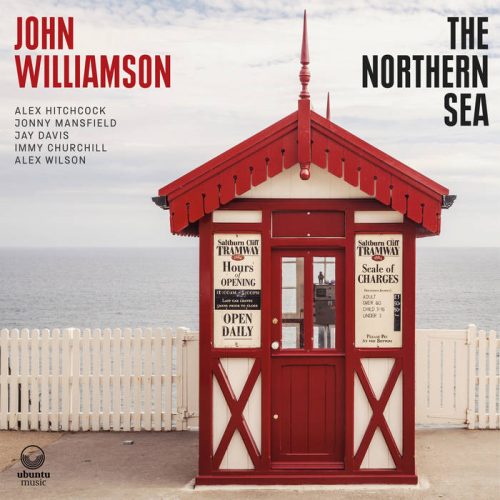
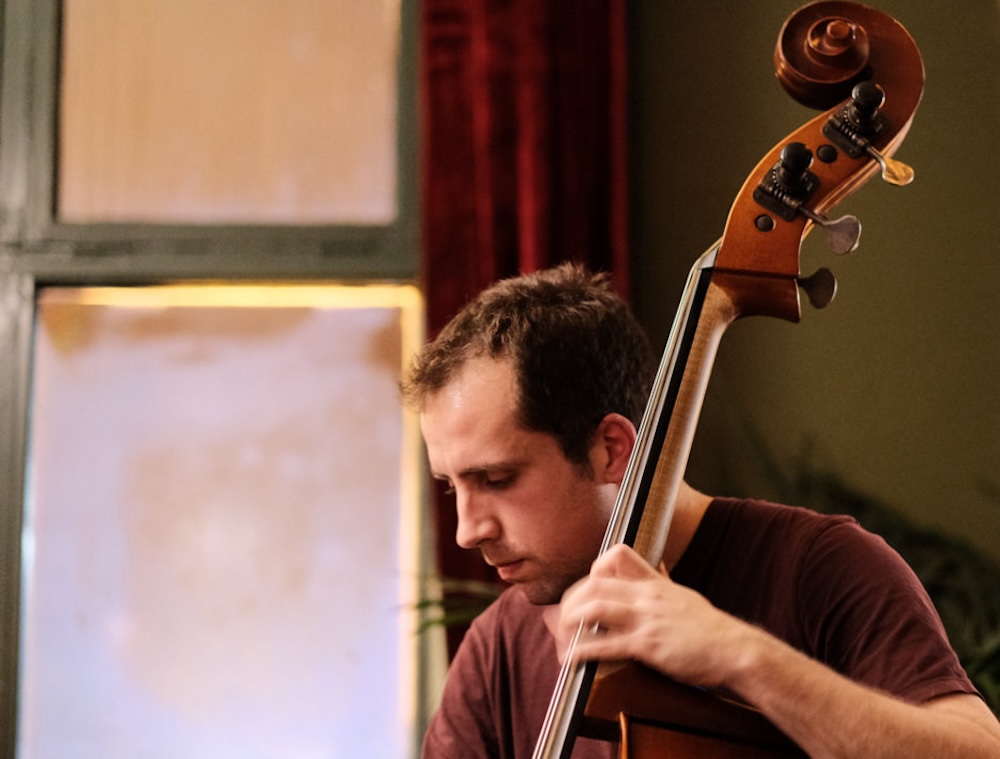
London bassist John Williamson has just dropped his debut album as bandleader and composer, called The Northern Sea. This dazzling first act orchestrates a symphony of some of the UK’s freshest and fiercest jazz talents.
This star-studded band boasts Alex Hitchcock on tenor saxophone, Jonny Mansfield striking the vibraphone, Jay Davis drumming up a storm, Immy Churchill lending her voice, and Alex Wilson tickling the ivories on piano. The legendary pianist and composer Nikki Iles takes the reins as producer.
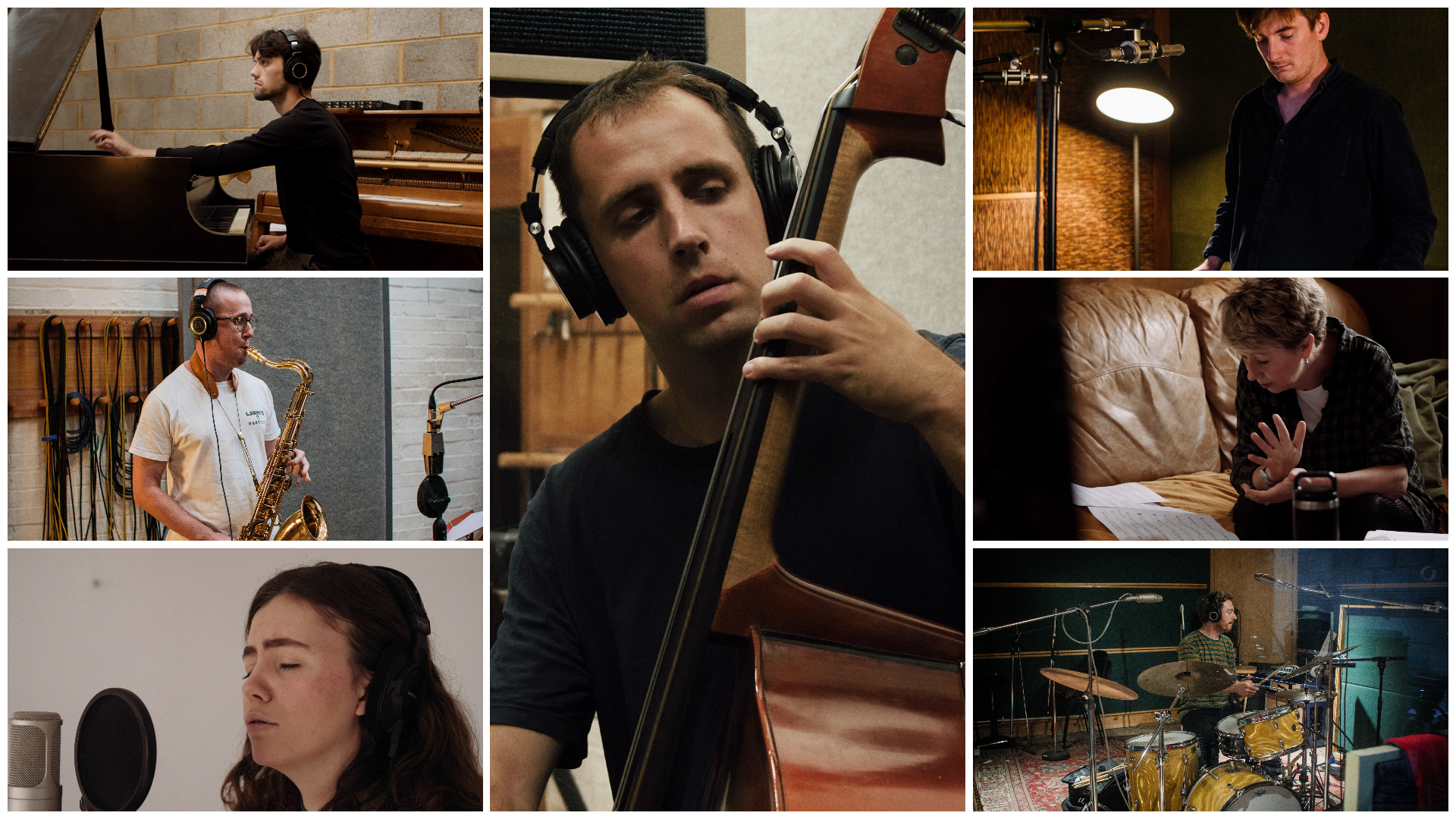
Williamson describes the music from The Northern Sea: “The material is arranged for avariety of line ups, from duo to full sextet,relying on the commitment and invention of themusicians to build a coherent sound.”
Influences range from Charlie Haden and Lee Konitz to Radiohead, Charles Mingus, and Carla Bley, resulting in music that captures a vast array of emotions and styles.
Snag your copy of the CD, featuring artwork by Nico Taylor, insightful liner notes by Williamson, and lovely photography by Tom Sankey, right this way. Dive into the album below, and as you listen, enjoy Williamson’s track-by-track breakdown.
1. Contrafact 1
This is a contrafact (new melody on an existing chord sequence) based on the jazz
standard I Should Care. The tune makes heavy use of notes outside the parent key of C
major, to give an angular, dissonant sound that relies on melodic shape to retain cohesion.
Solos are from John Williamson (bass), Jonny Mansfield (vibes), and finally Alex Hitchcock
(tenor saxophone).
2. Gozo
Like most of the album, this piece started as an isolated melodic line. After being honed on
gigs and redrafted, it settled into its final form as a loose, free-sounding yet ‘through-
composed’ tune — there are no solo sections, and the improvisation is instead contained
in the flexible delivery of the fixed melodic content. The title refers to a dog that one of
John’s sisters met in an animal sanctuary in Gozo, and who was eventually adopted by
their parents. Rufus — for he is the dog — was hiding under a table at Saltburn Jazz Club
the first time this tune was performed.
3. Intro To The Northern Sea
4. The Northern Sea
The title track was the last to be composed, after a few months of writer’s block which
John tried to escape by playing endless sequences of notes without a harmonic or
structural context. One such sequence became the basis of this piece, and the intro is a
nod to the ‘blank verse’ way the notes of the tune were first assembled. Rolling between
three- and four-beat time signatures, a winding melody makes brief excursions in and out
of the home key. The instrumentation shrinks to a piano trio, finding a chamber jazz feeling
which gives way to a cathartic second section as saxophone, vibraphone and voice enter.
Solos are from Alex Wilson (piano), Alex Hitchcock (tenor saxophone) and Jonny
Mansfield (vibraphone).
5. Nothing Grows In Concrete
The opening two phrases of this piece are lifted from a fragment of Sibelius’ Symphony
Number 2, which John returned to for inspiration having played it years previously in his
local youth orchestra. The sparse instrumentation (vibraphone, bass and drums) and
austere delivery is designed to cut through the naive simplicity of the melody.
6. Contrafact 2
This contrafact is loosely based on the chord sequence from the standard I Can’t Believe
That You’re In Love With Me. Inspired by greats such as Lee Konitz, Warne Marsh and
Lennie Tristano, John aimed to use strong, ‘singable’ gestures and motifs to sell an
otherwise abstract, highly chromatic melody. This piece was originally written for the
Washington DC-based saxophonist and Konitz disciple Brad Linde, with whom John
played as part of Team Players while spending time in the US. Solos are from Jonny
Mansfield (vibraphone), Jay Davis (drums), and Alex Hitchcock (tenor saxophone).
7. Get Out While It’s Light
The three-part structure of this piece is inspired by Charles Mingus’ programmatic works.
The opening section is based around the first melodic pattern, which appears in three
places, transposed each time, and requires an unusual chord sequence that gradually
becomes more ‘inside’ and traditional throughout. After Alex Hitchcock’s saxophone solo, a
simmering walking bass line takes over, with exploratory improvisation from Jonny
Mansfield (vibraphone), and drums growing steadily more intrusive in the build-up to a solo
by Jay Davis. The piece concludes with an energetic and disorganised recapitulation of the
opening section.
8. Contrafact 3
The final contrafact is in a chordless trio instrumentation, allowing for an abstract,
disjointed melodic line that conceals the chord sequence from Without A Song, and leaves
room for a nearly continuous drum solo until the bridge.
9. Other People’s Dreams
Beginning with a simple bass melody, a highly dissonant vibraphone arpeggio gives a clue
as to where the piece might go. A looping chord sequence that never quite resolves
supports the main melody, bass solo, and a steadily building development section, until the
melody from the introduction reappears in a chaotic final section. The saxophone line here
begins completely ‘outside’ (a G7 arpeggio over B major) but changes course into a series
of sentimental melodic gestures that sit uneasily in their context.
10. 2700 Q Street Northwest
This piece was first drafted by John with Immy Churchill (voice) when they were studying
as postgrad and undergrad respectively at the Royal Academy of Music. The initially
simple melody is inspired by ‘big-sky’ Americana, but modulates to a distant key in the
bridge section before finding its way back home. An unaccompanied bass solo in the
middle leads into a closing recapitulation in which the climactic key change goes a step
further than before and the voice/saxophone melody reaches its peak. In the run of gigs
and tours that lead to this album, sets would usually close with the final bass notes of this
piece.
11. Gozo (Duo)
The final track was the last to be recorded, in an abbreviated vibraphone/bass duo form
that is quieter and more contemplative than the other tak
