
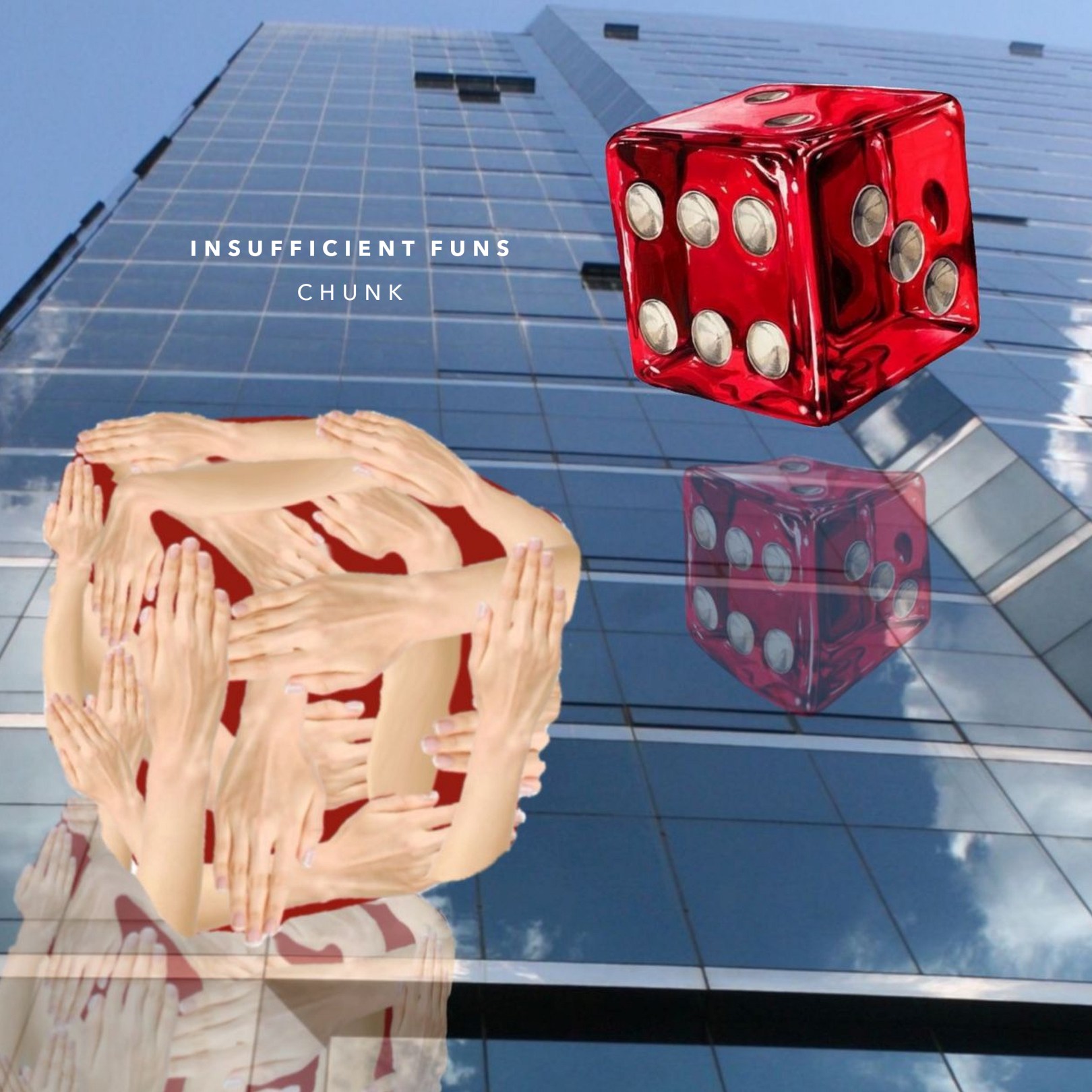

There’s a certain kind of record that doesn’t ask for your attention politely; it grabs it, shakes it a little, then leaves you to figure out what just happened. Chunk, the debut from Insufficient Funs, lives exactly in that space, but it never feels hostile. It feels alive, restless, and strangely playful, like two musicians daring each other to push further with every passing minute.
Matthew Jacobson’s drumming isn’t just rhythmic support; it’s architecture, constantly shifting under your feet while still holding everything together. Sam Comerford’s bass saxophone, on the other hand, feels almost physical in its presence, moving from guttural growls to piercing cries that seem to cut through the air rather than sit inside it.
The opening stretch sets the tone immediately. ‘Worn Key’ feels like a door creaking open into something uncertain, low and resonant, hinting at weight without revealing too much. Then ‘If Not’ flips that mood on its head, jittery and anxious, like a sudden rush of thoughts you can’t quite organise. By the time Chunk arrives, it’s all texture and impact; short, percussive, almost tactile, like a sound you can reach out and touch.
There’s a clever irreverence in how they handle standards. ‘Tea for Two’ doesn’t reinterpret so much as dismantle, leaving behind fragments that feel familiar but never settle into recognition. ‘RoJa’ pushes intensity further, with Comerford’s sax hitting sharp, almost abrasive peaks while Jacobson responds with explosive, unpredictable bursts. ‘Steamm Thaw’ then pulls things back into a slower, more industrial hum, giving the album a sense of breath without ever fully relaxing.
The back half leans deeper into abstraction without losing momentum. ‘And Much’ feels like a conversation happening in overlapping languages, chaotic but oddly coherent if you sit with it long enough. ‘The Song Is You’ mirrors the earlier deconstruction approach, stretching and warping its source material into something entirely new. And then ‘Cicaplast’ closes things quietly, almost delicately, like the aftermath of a storm where the air still hums but nothing moves.
What holds Chunk together is its sense of play. It’s unpredictable, sometimes abrasive, but never cold. There’s intention behind the chaos, and even in its most disorienting moments, it feels alive.
