

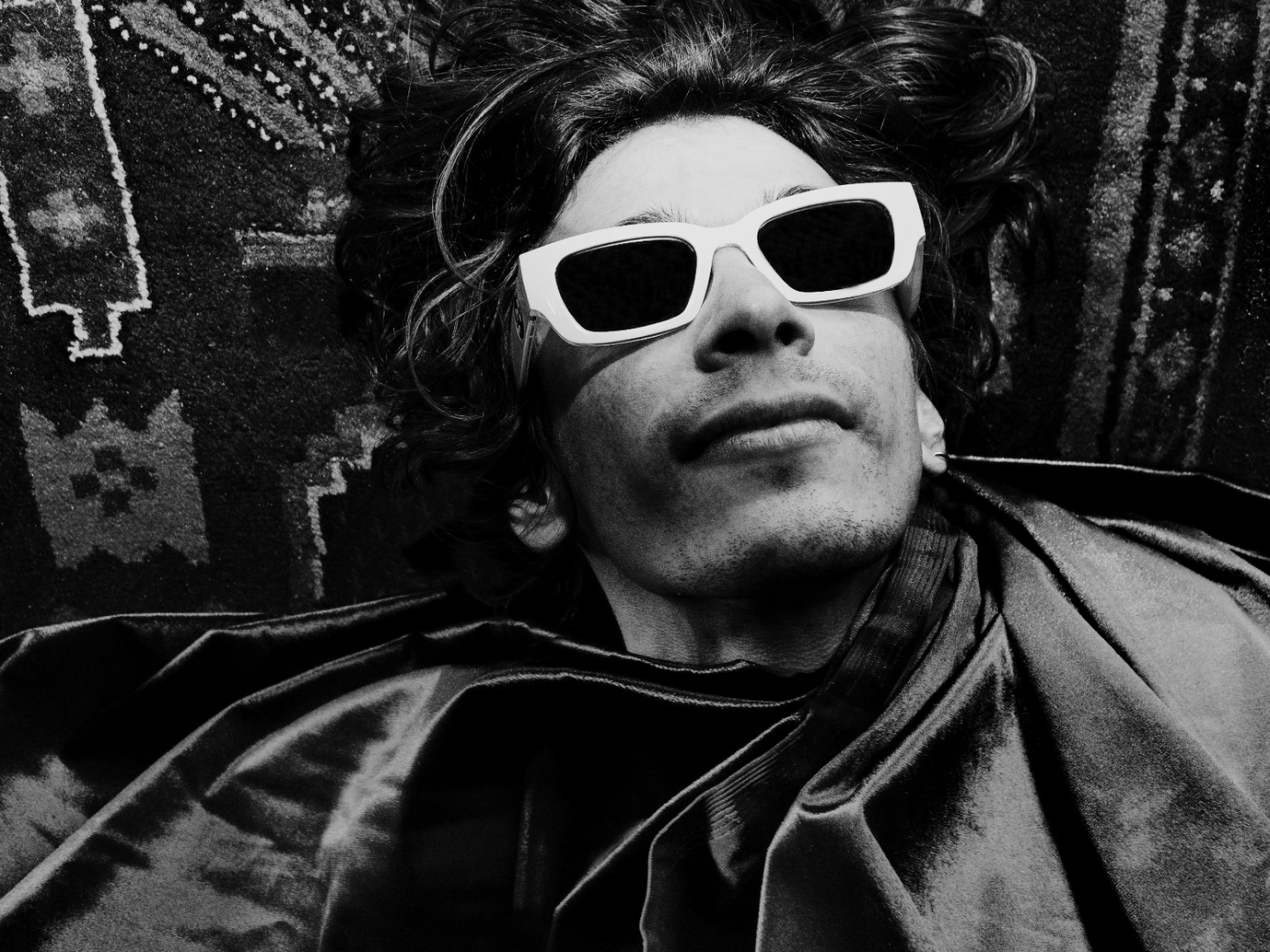
The Sirens beckon from mythological depths, where grief dissolves into groove, and temptation tangos with surrender. Oscar “SHOLTO” Robertson conjures celluloid reveries— Rachel Kitchlew’s harp mists hover over Clementine Brown’s swooning strings while Phoebe Coco’s voice lures like an ancient sea-song.
Tracks like ‘Persephone’s Perception’ reimagine descent as choice, and the standout ‘Tied To The Mast’ captures Turner’s tempests in sound. Seriously, the whole album is excellent, but two tracks are quite frankly stunning!
What we have here is Umiliani meeting Axelrod in Hackney’s dreamscape, where every bass throb and flute whisper paint scenes for films that may or may not be made.
Over twelve tracks, SHOLTO transforms mythology into cinematic jazz—this is by far his strongest offering yet!
With the album out in the multiverse, we had a chat with Oscar about it, musical influences, creative process, and plenty more.
Hey Oscar. What are you up to at the moment?
Feeling fine and working on a ton of collaborations.
What’s your earliest musical memory? And, how did you first get into making music?
When I was about 7, we were in Scotland with my family and upstairs in this charity shop, there was an old 1940s trap drum kit. I was mesmerised by it. Not long after, I was taken to see a Buddy Rich tribute act, and the way the drums were so loud, visual and performative and commanding – it just captivated me, and I was hooked.I didn’t start recording or producing my own music until later, when the band I was in split up. I was living in a shed in Peckham and had 1 mic, and my mate David had an interface/desk, so we started experimenting. Before that, I found music became my way of fitting in and being accepted at school. I was known for that.
Where do your musical influences come from?
They are pretty broad.I grew up in a theatrical household. My grandmother was an opera director, so there was always classical music blaring around the home, and it obviously seeped in, but then my dad was a fan of bands like Air, and all the Blue Note and Impulse jazz stuff, plus the classic stuff like The Who and The Kinks.
How did this album’s process or concept significantly differ from Letting Go of Forever?
It was a little more conceptual. Letting Go of Forever was a transformative time in my life where I was making music freely, living in Paris, working out of cheap rehearsal rooms and coming back to my studio in London for jam sessions occasionally. It felt free, experimental, fragmented and a tiny bit more DIY and patchwork-like. However, The Sirens was more of a clear concept from the get-go, all recorded at my London studio and Total Refreshment Centre studios with Syd Kemp. I also used less musicians, so it’s more concise and condensed.
Your music is rich with mood and texture, yet also a lot of space. With all the possibilities cinematic music offers, do you find it challenging to keep from overloading it?
I think that’s always the temptation is to keep piling stuff up. Thankfully, I’m a slave to my own limitations. I can only play so much on piano/guitar, etc, so I favour simplicity, keeping space in the melodies allows me to orchestrate them in a fuller way. Taking from the likes of David Axelrod – I’d rather 8 instruments playing 1 note with meaning than 4 instruments playing tons of notes. It’s where my classical influences subconsciously seep in. It’s the small subtlety in layering. I love experimenting and throwing it all at the wall, and putting way too much on, and then going away, digesting it and stripping it back, until each thing has a purpose.
Could you talk a bit about the guest artists you collaborated with on the album?
Phoebe Coco is amazing – an artist, singer and producer who’s ecologically rooted. She’s a joy to work with. We have this sort of telepathic relationship where I show her what I’m working on, and she walks into the studio and just sings exactly the right thing. She’s a big, wonderful personality, and she was the perfect voice for the delicate yet looming sound of The Sirens. Thomas McBrien is an ice cream freezer, right nice geezer, and basically the right-hand man in the SHOLTO project. Easiest guy to work with and a wicked composer and piano player. We wrote a few of the tunes on the album together. Lea Petges – French singer and poet. Me and Lea crossed paths with each other a few years back, and something clicked. She came to London, and we worked on producing her first EP. When I had an idea for a song, I sent it to her, and she digested the mood and wrote the most fitting, hauntingly beautiful poem to be spoken of the top.
I’m curious by how the music on this album connects with your other projects like SFJ, Finn Rees, Rachel Kitchlew etc..What creative benefits do you find in your solo work that might be missing from your collaborations? Do these different projects ever cross-influence each other?
I’m always being inspired by other people around me. Since starting Sholto, it’s opened me up to a plethora of musicians, friends and characters I wouldn’t have realised were out there. It’s like being part of a club doing this kind of music. Everyone collaborates, Influences and supports each other, and you all start to help each other on your own projects – creative incest!


Speaking of SFJ. How did you meet and come to work with David Bardon?
SFJ is the reason for me still doing music. Dave and I met in 2014/2015 – he’s my best buddy and business partner. We run our studio together, produce people, make music for TV, film and advertising, and make our own stuff as SFJ. We were disillusioned when our separate bands split in 2016, and both wanted some autonomy and longevity in the music industry, so we started slowly setting up a studio and learning how to produce and record, and have been ever since, nearly 10 years on.
How prolific are you in the studio? From an outsider’s perspective, you appear to have a wealth of material. Do you typically write just enough for an album, or do you have a treasure trove to sift through before picking what makes the cut?
I make music every day. I’m very lucky to do so. I’ve put all my eggs in one basket, and London is cutthroat to survive in, so it’s more a need to keep going than anything else. I have ideas constantly, and I have to find pockets of time to do them. We work with other artists mostly in the day, so I wind down by having a few hours to myself at the end of the day to create, if I’m lucky. But yeah, I have hard drives and hard drives of stuff, but I’m trying to focus on quality over quantity now a bit more. I like getting stuff out; if I sit on it, my brain feels swamped. Once released, I feel it makes space for new ideas.
Which record do you love to listen to while chilling at home?
Daughters of Darkness – Francois de Robauix
Adult Themes – El Michels Affair
Souvenir – Maston
Infinity of Now – The Heliocentrics
What are a few of your favourite albums of 2025 so far?
Free Up – Thandii
Daybreak – Sven Wunder
Three things we should know about SHOLTO…
- Sholto means ‘seed sower’ in old Scottish
- It was my grandad’s first name.
- I was once an international sportsman for a nanosecond, but I’ll leave it there, haha.
Do you have any final words for the Twistedsoul community?
Big love and thanks!
