

This week’s guide is by CF Smith and contributors Words By Shoaib, Benny Thomas, and Irfan Ayaan.
Regular visitors to the site will know by now that at Twistedsoul, we believe that the most exciting music often lives just outside the spotlight. That’s why our Between The Cracks series exists—to shine a light on records that might slip past the mainstream radar but deserve a place in your listening rotation and collection. Whether it be the fleeting vignettes built from field recordings of Lia Khol or the sprawling improvisational jazz of مد [Ahmed], these records are worth your time. Head below and enjoy digging between the cracks. Hopefully, you’ll find a few musical treasures you didn’t even know you were searching for. Happy listening.
Albums
أحمد [Ahmed] – سماع [Sama’a] (Audition)
This is one of those incredible albums that feels like it just appeared out of thin air, only to blow my mind away completely! When أحمد [Ahmed]—the quartet of Seymour Wright (alto sax), Pat Thomas (piano), Joel Grip (bass), and Antonin Gerbal (drums), step into سماع [Sama’a] (Audition), they don’t just play compositions. They dismantle them, scatter their fragments across the room, and rebuild them into towering structures of repetition and frenzy. The album, inspired once again by Ahmed Abdul‑Malik, this time locking into Jazz Sahara. The quartet takes Ahmed’s mid‑century fusions of Arabic music and New York jazz, radically reimagining them: modal motifs are broken into shards, then looped, stretched, and hammered into ecstatic grooves. The opener, Ya Annas (Oh, People), is a declaration of intent. Wright’s saxophone shrieks against Thomas’ explosive piano clusters, while Grip and Gerbal lock into a pulse that feels closer to a warehouse rave than a smoky jazz club. It’s improvisation, but it’s also propulsion, music that insists on moving bodies as much as minds. On Isma’a (Listen), the quartet strips back to a tense minimalism, but only for a short while, before heading off into frenetic free-sax improv. El Haris (Anxious) pushes that tension into chaos, a storm of piano and saxophone that teeters on collapse but never loses its rhythmic spine. By the time Farah’ Alaiyna (Joy Upon Us) arrives, the release is overwhelming: a jubilant eruption that feels earned after the record’s relentless build. Who says free music can’t make bodies move? Thomas and company prove transcendence has a groove, anxious, joyful, utterly wild! We concur with Boomkat:“If you buy one jazz record this year….” – CFS
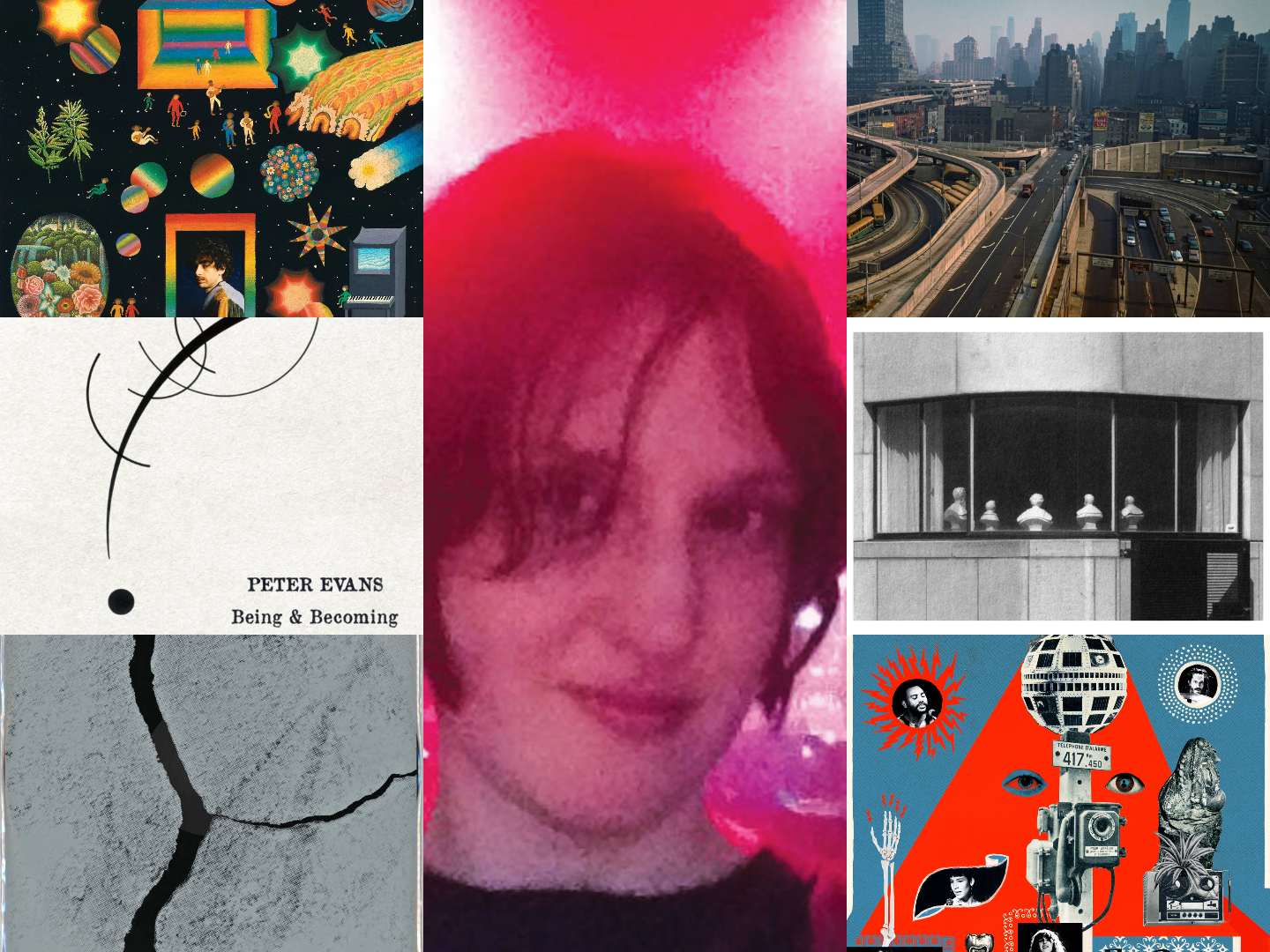
Peter Evans’ Being & Becoming – Ars Ludicra
Following on from أحمد [Ahmed], if you buy two jazz albums this year… Ars Ludicra is what happens when trumpeter Peter Evans decides he’s tired of being polite and drags a vibraphone, bass, and drums into a jazz fusion carnival. Peter Evans and his crew (Joel Ross, Nick Jozwiak, Michael Shekwoaga Ode) wrestle, tease, and tumble through sound with virtuosity and playfulness. One track (Malibu) might shimmer with vibraphone textures and trumpet lines that feel both lyrical and mischievous, the next (Pulsar) might lock into angular grooves where trumpet darts in and out, and electronics add a sly, unpredictable edge. The highlight (My Sorrow Is Luminous) is a symphonic, haunting cut. Trumpet, bass and electronic weirdness explore shadowy textures, while drums and vibraphone scatter like sparks. It’s both meditative and restless. At times, it is delightfully unhinged, and you’re not sure if you’re listening to jazz, contemporary classical, or a cosmic comedy sketch. One of my favourite albums of 2025.– CFS
Simon Popp – Trio
Three drummers walk into a studio, not a joke, but a philosophy. Simon Popp’s Trio is sonic Kintsugi: fractures gilded into unity, where Sebastian Wolfgruber and Flurin Mück’s sticks kiss and clash with Popp’s polyrhythmic alchemy. Collaboration as a collision sport, playfulness as architecture. Metal sings, wood whispers, and somewhere between OiOOiOiiOi’s vowel chaos and Birkenschlag’s arboreal thwack, percussion becomes language without grammar. It’s Munich minimalism meets maximalist joy, eleven tracks that prove three heartbeats can synchronise into something stranger than rhythm: communion. As we said before, Popp never seems to disappoint, but always seems to surprise! – BT
Yalla Miku – 2
Geneva-based collective Yalla Miku deliver a thrilling second effort that solidifies their identity as culture colliders. Blending Krautrock, dub, psych, and Middle Eastern/East African influences, 2 is raw, militant, and unclassifiable. Standouts like ‘Le Palais de Bachar’ explode with synths and bilingual vocals about the Syrian revolution, while tracks shift from sharp, Stereolab-leaning arrangements to vibrant, psych-pop-dub-infused sounds. The lineup has evolved, but the adventurous spirit remains, with Cyril Bondi’s thumping percussion anchoring Emma Souharce’s blazing synths, Louise Knobil’s deep bass, Samuel Ades Tesfagergsh’s vibrant krar, and Cyril Yeterian switching between an electric guitar and banjo. A mesmerising, genre-defying 38 minutes that scintillates with collective chemistry. – IA
Sessa – Pequena Vertigem de Amor
Pequena Vertigem de Amor feels like watching Sessa step through a doorway and finding the world slightly tilted, warmer, and strangely more fragile. He’s still working with the same sensual quietness that defined Grandeza and Estrela Acesa, but the energy has shifted. Fatherhood gives these songs a new gravity. The grooves sway, the strings glow, and his voice moves with a softness that comes from being changed without fully understanding how. What this really means is that the album isn’t about serenity, it’s about learning to live inside the dizzy spell. The opener Pequena Vertigem eases you straight into that feeling, drifting between calm acceptance and the thrill of losing your balance. Vale a Pena, one of the early singles, leans into sweetness without losing complexity, its electric-piano warmth carrying the weight of exhaustion and devotion in equal measure. Nome de Deus hits differently. Staccato piano lines and martial percussion give it a quiet defiance, like someone whispering a prayer they’re still not sure they believe in. Sessa doesn’t chase transcendence here. He wanders into it, barefoot, reflective, and glowing at the edges. – WBS
Joanne Robertson – Blurrr
Joanne Robertson’s Blurrr may not be for everyone, but it offers many rewards for those who love their folk music on the experimental side. Blurrr is a deeply personal and meticulously crafted album, born from a period of intense creative and emotional processing, between painting sessions and the demands of motherhood. This intimate backstory informs the album’s sonic landscape, characterised by a deliberate, almost hesitant, approach to songwriting. Robertson eschews traditional lyrical structures in favour of intuitive, whispered vocalisations, a move that forces the listener to actively participate in the construction of meaning. The core of the album’s success seems to lie in this embrace of cloudy lyricism, a world where lyrics become less important than the textural and emotional impact of the sound. The three tracks on the record featuring Oliver Coates are the highlights. His string arrangements aren’t driving the narrative; they function as a hazy, atmospheric backdrop, subtly influencing the emotional resonance of the tracks. Blurrr is a recording steeped in subtle beauty and deep emotional depth, illuminated by Oliver Coates’s delicate touch. Click, listen and enjoy! – CFS
Lia Kohl – Various Small Whistles and a Song
Various Small Whistles and a Song is what happens when you take ordinariness seriously enough to frame it, but not so seriously that you forget it’s absurd. Lia Kohl playfully imagines Ed Ruscha’s 1964 book, Various Small Fires and Milk and melts it into sound, each flame becoming breath, each photograph a portal into accidental intimacy. Fifteen whistles (human, metallic, commercial, lonely). The whistles are small fires of consciousness: a voting line in Chicago exhales its boredom, a penny whistle seller in Guangzhou monetises air itself, emergency sirens confess their perpetual anxiety. A standout moment for us is “Walking Home, Los Angeles,” a meditative amble where whistles blend seamlessly with the rich tones of the saxophone. And then: the milk. Track sixteen. Voices singing together, muffled through floorboards, collective, funny, sloppy and impossibly tender. Featuring collaborators like claire rousay, Macie Stewart, and Patrick Shiroishi, as field recording accomplices, Kohl’s fascination with the ordinary has given us one of the year’s unexpectedly brilliant albums. – CFS
