
𝙊𝙪𝙧 ‘𝙏𝙧𝙖𝙘𝙠 𝘽𝙮 𝙏𝙧𝙖𝙘𝙠’ 𝙜𝙪𝙞𝙙𝙚 𝙨𝙝𝙚𝙙𝙨 𝙡𝙞𝙜𝙝𝙩 𝙤𝙣 𝙩𝙝𝙚 𝙨𝙩𝙤𝙧𝙞𝙚𝙨 𝙗𝙚𝙝𝙞𝙣𝙙 𝙨𝙤𝙢𝙚 𝙤𝙛 𝙤𝙪𝙧 𝙛𝙖𝙫𝙤𝙪𝙧𝙞𝙩𝙚 𝙖𝙧𝙩𝙞𝙨𝙩𝙨’ 𝙢𝙪𝙨𝙞𝙘.
We love pulling back the curtain on the stories and inspirations behind intriguing new releases. It’s always fascinating to hear the personal anecdotes, creative processes, and little-known tales that shaped each track. These insights not only give us a deeper appreciation for the artistry that goes into crafting these musical gems but also create a sense of connection with the artists.
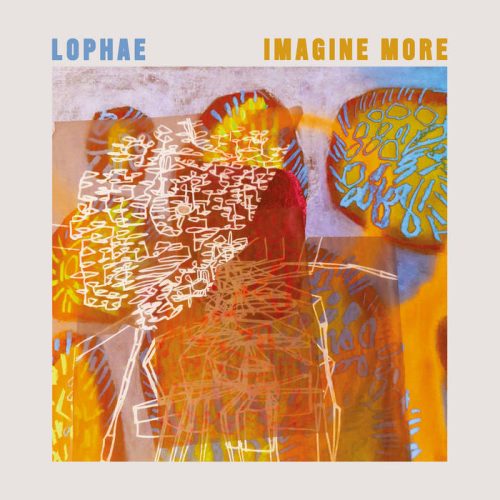
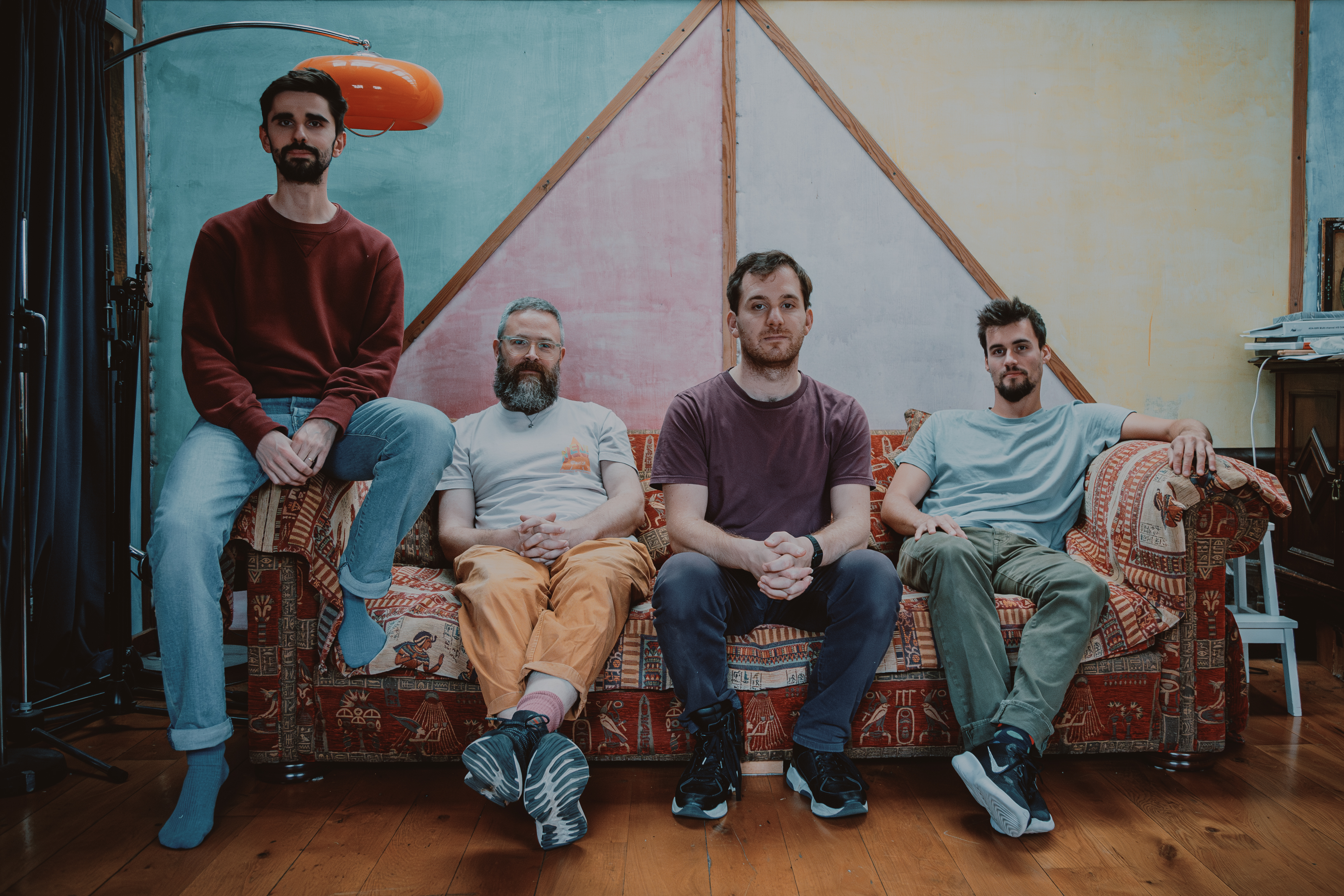
Lophae‘s ‘Imagine More’ feels less like a set of songs and more like a living conversation between four deeply attuned musicians. Drawn from the same sessions as their debut, the record carries an immediacy that blurs the distinction between composition and improvisation into one continuous stream. Each track opens a door into a pocket universe, sometimes full of swagger, sometimes hushed with intimacy, but always grounded in the group’s shared pulse.
Greg Sanders’ guitar shifts roles fluidly, from propulsive energy to impressionistic haze, while Sam Rapley’s tenor sax bends between smoky lyricism and searching meditation. Tom Herbert’s bass anchors the sound with rare warmth, and Ben Brown’s drums ripple with groove and texture, often making the rhythm feel like an atmospheric element. Together, they sketch music that is playful yet deeply resilient, reflecting Sanders’s own journey through chronic illness with defiant creativity.
Whether fizzing with danceable drive or unfolding with quiet tenderness, ‘Imagine More‘ offers a layered, generous listening experience. It invites you to return often, discovering new textures each time, like revisiting a world that keeps reshaping itself in sound.
Greg Sanders has once again gifted us a playlist of songs that inspired the creation of ‘Imagine More’. Stream the playlist below, followed by Sanders’ exclusive track-by-track guide.
Track 1 – Little House
‘Little House’ is named for a gorgeous little house in St Ives, where I went on a surfing trip with friends and fellow musicians (and members of the amazing group Aspyrian) Robin Porter and Matt Parkinson, in the late summer of 2020. Robin, Matt and I had a dreamy few days surfing, cooking, eating, busking in St Ives, and listening to music together, and in particular, we listened to quite a bit of funky guitar jazz from John Scofield and Charlie Hunter. I wrote Little House on a non-surfing day. I had regular guitar lessons with UK Jazz giant Chris Montague for about 4 years, and one of the first things he gave me to work on was the melodic minor scale and all its potential. Writing Little House, I wanted to explore using parallel melodic minor scales (in this case D melodic minor and B melodic minor), with the easy funky vibe that players like Scofield and Hunter do so well. I really admire the way Scofield writes – his tunes are always super concise but deep – two or three really strong ideas, well presented and with just enough complexity to make them really fun for improvising on, without being too restrictive. Pete Churchill – my composition & arranging teacher during my MA pointed this out to me, and he was 100% right! The “head” (or main melody) of the A section is based on a little upwards run up the guitar strings, making use of some open strings with some pull-offs…in a way that I associate with the kind of guitar lines Radiohead often play… but which is actually played by Sam on the saxophone! An instrument on which this line doesn’t fall under the fingers so easily. I’m not sure where the psychedelic outro section came from – I do love flamenco music and used to go see a lot of flamenco concerts as a kid. My mum is Spanish and she was always keen to take the family to see live flamenco concerts in London, so maybe a bit of that general vibe is coming through! I had fun digging into my absurdly large collection of guitar pedals to get that full stereo, wide-screen, immersive feeling with the guitar in this outro section. I’m really happy with the mix on this one (and on all the tunes), Ben Lamdin got a really satisfying squelchy bounce on the drums & bass, and Caspar Sutton-Jones did an amazing job on the master, which really brought that bouncy squelch out even more.
Playlist tunes:
1) John Scofield – Peculiar
2) Rebirth Brass Band – I’ll Be Glad When You’re Dead
Track 2 – Another You
I wrote Another You originally way back in 2013, on first finding out about the concept of negative harmony. As an exercise, I took the chords of the jazz standard ‘There Will Never Be Another You’ (by Harry Warren & Mack Gordon), and tried to create the “negative” of that chord progression, with a few little adjustments to any chords that didn’t quite sound… “nice” to my ears. I liked the progression that was produced, so I wrote a melody to it! The aim in writing the melody was to replicate the amazingly balanced phrasing and narrative pull of the original melody, but with a completely new melody! Over the years I’ve played the tune with many different rhythmic feels and grooves, but I really like this slightly lurchy Sly Stone & D’Angelo inspired take. This was the first tune we recorded on the first day of the Perfect Strangers and Imagine More sessions, and I feel like it’s a nice musical summary of our Lophae sound-world! I added the organ drum machine at home after the sessions. We didn’t record any of the Lophae stuff to a click track, so I used Logic Pro to create a tempo map from our live take, and then programmed the organ drum machine loop as midi, and looped that midi over the tempo map from our live take! Shout out to Ahnansé who actually explained to me how to do this when we were playing together in the wedding band at a very dear friend’s wedding! The organ drum machine loop idea is something that I associate in particular with Sly & The Family Stone (who I think were one of the first to do it), Shuggie Otis, and also Radiohead again!
Playlist tunes:
3) Sly & The Family Stone – In Time (drum machine)
4) D’Angelo – Feel Like Makin’ Love (guitar feel)
5) Chet Baker – There Will Never Be Another You
Track 3 – What We Were Waiting For
‘What We Were Waiting For’ started life around 2017, during my Jazz MA at the Royal Academy of Music. Barnaby Keen and Fabio De Oliveira (Babo Moreno) had around the same time both showed me this unbelievable YouTube video of Gilberto Gil playing a live version of Expresso 2222, with a band consisting of just guitars, percussion, and flute. Gil is an absolute master of a right-hand technique I just call “thumb & finger”… I’m sure there’s a better name for it. This is the video – I was noodling around on my guitar, having a go at this way of playing, and the opening accompaniment guitar part fell under my fingers. The melody came into my head quite quickly; it definitely bears a passing resemblance to the melody of ‘I Can’t Help It’… make of that what you will! Ben came up with this gorgeous bouncy groove, that has a big Gadd on ’50 Ways’ energy, and the chords and harmony take a lot of inspiration from Tom Jobin & Joao Gilberto and that whole beautiful & sophisticated Bossa Nova approach to harmony.
Playlist tunes:
6) Gilberto Gil – Expresso 2222
7) Paul Simon – 50 Ways To Leave Your Lover
8) Joao Gilberto – Insensatez
Track 4 – Imagine More
Imagine More has a good story. I’m very lucky to live in London and have so many amazing musicians as friends. One of them is a bass player from Nigeria called Mike Idowu. In summer 2022, I was playing a private house-party gig with Mike, an amazing drummer called Yoann Julliard, and an amazing singer (also from Nigeria) called Ed Emeka Keazor. We had prepared a load of Nigerian and Ghanaian highlife songs for the party, but after a while, we had already played everything we prepared! In order to keep the party going, Mike sang me a little guitar line for me to play, started playing a bassline, and then stepped forward and sang what seemed like 6 or 7 incredible songs, one after the other, all over this same groove that he had set us up playing. I didn’t know any of the songs, but I wanted to know what all of them were! I didn’t ever find out, but I did eventually work out that the groove he got us to play was a version of ‘Yaa Amponsah’, a Ghanaian song that is widely considered to be the first “highlife” song. But… before I found that out / worked that out / asked Mike, I was booked to play some solo background guitar at an art gallery. On that art gallery gig, I brought a loop pedal and spent a good 45 minutes of my set trying to recreate anything I could remember from those songs Mike sang at the house party. A bit like trying to remember a song you were dreaming, after you’ve woken up! Imagine More is the song that was written during that solo guitar art gallery gig, through the process of me trying to remember everything I could from what we played with Mike. The next day I sent a little phone recording of myself playing the tune to Mike – to see if it sounded like anything we had played together / he had sung – if I had been successful in my attempt at plagiarism. Mike reassured me that it didn’t sound anything like any songs he knew, had ever played, or ever sung! But he said he liked it. Which was nice.
Playlist tunes:
9) Bembeya Jazz – Mami Wata
10) The Cavemen – New Pammy
Track 5 – Ball In A Street
In September 2023 I moved into a lovely flat, on a quiet calm road in south-east London.
The last few years had been a bit of a nightmare housing-wise (anyone who rents in London will be able to relate, and probably anyone who rents in many other cities as well), and my housemate and I had been to 45 in-person flat viewings (possibly more, no exaggeration) before we found this one.
I wrote Ball In A Street as an expression of gratitude and celebration at finally having found somewhere that felt like the home I needed! Musically, there are a few sources I’m drawing on.
I love Abdullah Ibrahim and his harmonic language which blends South-African township jazz and ‘Great American Songbook’ functional jazz harmony. I was playing Bob Dylan’s ‘Don’t Think Twice It’s Alright’ a lot around that time in an instrumental trio setting, and every so often I have a period of obsessively listening to Aguas De Marzo, I think this was one of those periods. The 9/8 rhythm is just something I love generally – this Anne Marie-Nzie (from Cameroon) tune doesn’t really sound like Ball In A Street at all, but it’s one of the first tunes I can remember hearing that was written in this 9/8 rhythm.
Playlist tunes:
11) Abdullah Ibrahim – Water From An Ancient Well
12) Bob Dylan – Don’t Think Twice
13) Tom & Elis – aguas de marzo
14) Anne Marie-Nzie – beza be dzo
Track 6 – To Friends
To Friends is another tune that was written during my RAM MA, and that draws a lot on the music of both Brasil and South Africa! The groove and rhythm are based on Ijexá, from Brasil, and the harmony is based on South-African Township Jazz. I wanted to make spaces for improvisation that were a little different from the jazz convention of improvising over the whole form, or “taking a chorus” as it’s known. To that end, I structured the head to have 2-bar phrases followed by 2-bar gaps – perfect for Tom to let loose with some pedal-powered goodness.
Playlist tunes:
15) Ijexa (Filhos De Gandhy) – Clara Nunes
16) Manenburg Revisited – Abdullah Ibrahim
Track 7 – Fry Before You Buy
Fry Before You Buy is named for another dear friend, and amazing percussionist – Will Fry.
It started life during the lockdown as a little idea I was going to send to Will for him to record some percussion on. We both forgot about that plan, but I opened up the file again a year or so later, and had fun moving parts of the melody around and working on it a bit more. It’s another tune (like Ball In A Street), written in this Cameroonian Bikutsi-inspired 9/8 rhythm, although it also doesn’t sound anything like Cameroonian Bikutsi. Also, I can’t say what the musical link is, if any, but I absolutely love Bill Frisell, and I had him in mind a lot during the writing. It might be something about his lyricism that I tried to achieve in the written melody.
Playlist tunes:
17) Strange Meeting – Bill Frisell
Track 8 – Two Of The Three People Who Aren’t Me
And finally!
One of my other incredible guitar teachers (alongside Chris Montague, Mboka Liya, John Parricelli, and Phil Robson) was Mike Walker. During one of my lessons with him, we were listening back to a recording of a recent gig. It was a quartet gig – so there had been three people who weren’t me playing. Of those three people, two of them either were or weren’t doing something in particular (I can’t remember what!). We were discussing the timbre of the group as a whole, and the moments when the group sound was particularly big or particularly small. At some point I said to Mike something like – “of the three people who aren’t me, two of them [are doing something]”, and thought that would be a good slightly mind-bending title for a song. For me, it brings to mind the tradition of bizarre but grammatically correct English sentences such as “James, while John had had “had”, had had “had had”; “had had” had had a better effect on the teacher” My song title doesn’t quite bend the mind to the same level, though, sadly. Musically, it has a bit of an ECM vibe, though maybe a little more specifically if Kenny Wheeler had been asked to write music for a horror-thriller film…
Playlist tunes:
18) Nicolette – Kenny Wheeler
