

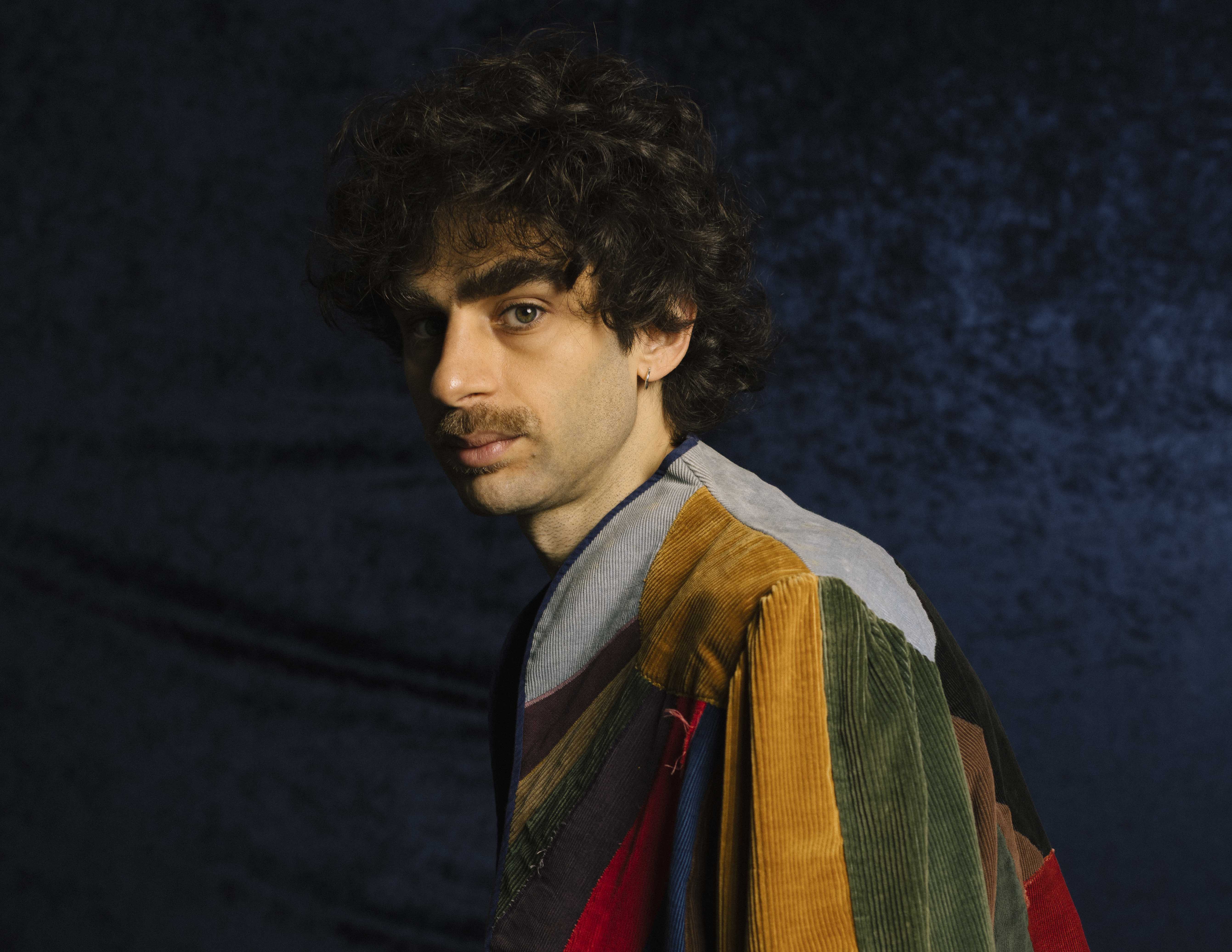
Brazilian singer-songwriter Sessa returns with his upcoming album, Pequena Vertigem de Amor, and its lead track, ‘Vale a Pena’, offers a luminous glimpse into his most personal work yet.
Built on the warm shimmer of a rare Suette electric piano, the track moves with a gentle sway, carrying Sessa’s fragile, blissed-out vocals like smoke drifting upward. His delivery feels almost whispered, exhausted yet serene, as if sung at the edge of sleep. The chorus of female voices, Cecília Góes, Lau Ra, Ina, and Paloma Mecozzi, enters like a guiding hand, urging him forward with layered harmonies that wrap his words in warmth.
Lyrically, Sessa accepts the contradictions of life, stones on the path, sparks underfoot, with a simple refrain: “Vale a pena / viver vale a pena” (“It’s worth it / living is worth it”). The song radiates both melancholy and joy, finding universality in intimate reflection.


‘Vale a Pena’ embodies Sessa’s new “crooked funky” vision, soulful, nocturnal, and deeply human. It’s a hymn to resilience, love, and the dizzying vertigo of change, setting the tone for his most transformative album yet.
As well as sharing the new track, we also asked Sessa a few questions about song and the upcoming album. Head below.
Tell me a bit more about your new single Vale a Pena?
“Vale a Pena” is a song that started on the piano, which is a bit unusual for me. After I wrote my past two records largely on the classical guitar and very within the traditions of Brazilian guitar influenced by Bossa, Choro and Samba sensitivities I started to feel a bit out of ideas on the instrument. So the piano came as a way to break that. Along with the piano I started exploring other possibilities with my voice so the song started with this movement of trying to placeme in less known zones to get somewhere new.
Going into Pequena Vertigem de Amor, did you have a sense as to what you were looking to do stylistically?
I had some elements, sparse ideas, I was exploring more sounds in the studio like electric and acoustic piano, early mono synths and early drum machines. These elements were completely absent from my previous records which were informed by a more radical approach of keeping things very minimalistic. Like I was saying, I was looking for new ways to approach the guitar after having that as my center tool for music expression, for understanding a band’s sound for so long. so my strumming went from fingerpicking to more full hand strumming, things took a more funky yet crooked turn, more nocturnal, more upbeat at times.
Talk us through your creative process? And what’s the concept behind the album?
The record was inspired by the early days and years of my fatherhood . the mix of shock and joy, of happy and hard, but in general it carries a broader message of understanding one self in face of personal change, which i think people can relate to with or without having children. because the nature of time has changed so much for me, this record has a more free style of writing and recording rather than following a very strict concept. i was writing little by little, music completely mixed with life, and i would book sessions when i put a few songs together so the overall result is a series of photos of these moments.
Do you have a favourite on the album? If so which one and why?
That’s always a hard one…i would say “Dodói” is a song that came together in a magical recording session with legendary Brazilian samba jazz pianist Marcelo Maita. i was chasing that stabbing piano sound for a long time whensomeone put me in touch with maita and we cut the band track and my vocals live in my studio. it was so uplifting!“roupa dos mortos” is another one that i think the flute arrangements by Alex Chumak, the percussion layers in the end of the song, the vibe in the trio live take and the mix work are very pleasing to hear.
Pequena Vertigem de Amor, arrives on 7th November via Mexican Summer. Pre-order here.
Sessa has described the album as “a bit more nocturnal, open-ended, crooked funky,” highlighting inspiration from soulful influences indigenous to North and South America, from Shuggie Otis, Roy Ayers and Sly Stone to Erasmo Carlos, Tim Maia and Hyldon.
