

We love pulling back the curtain on the stories and inspirations behind intriguing new releases. It’s always fascinating to hear the personal anecdotes, creative processes, and little-known tales that shaped each track, giving us all a deeper appreciation for the artistry that goes into crafting these musical gems.
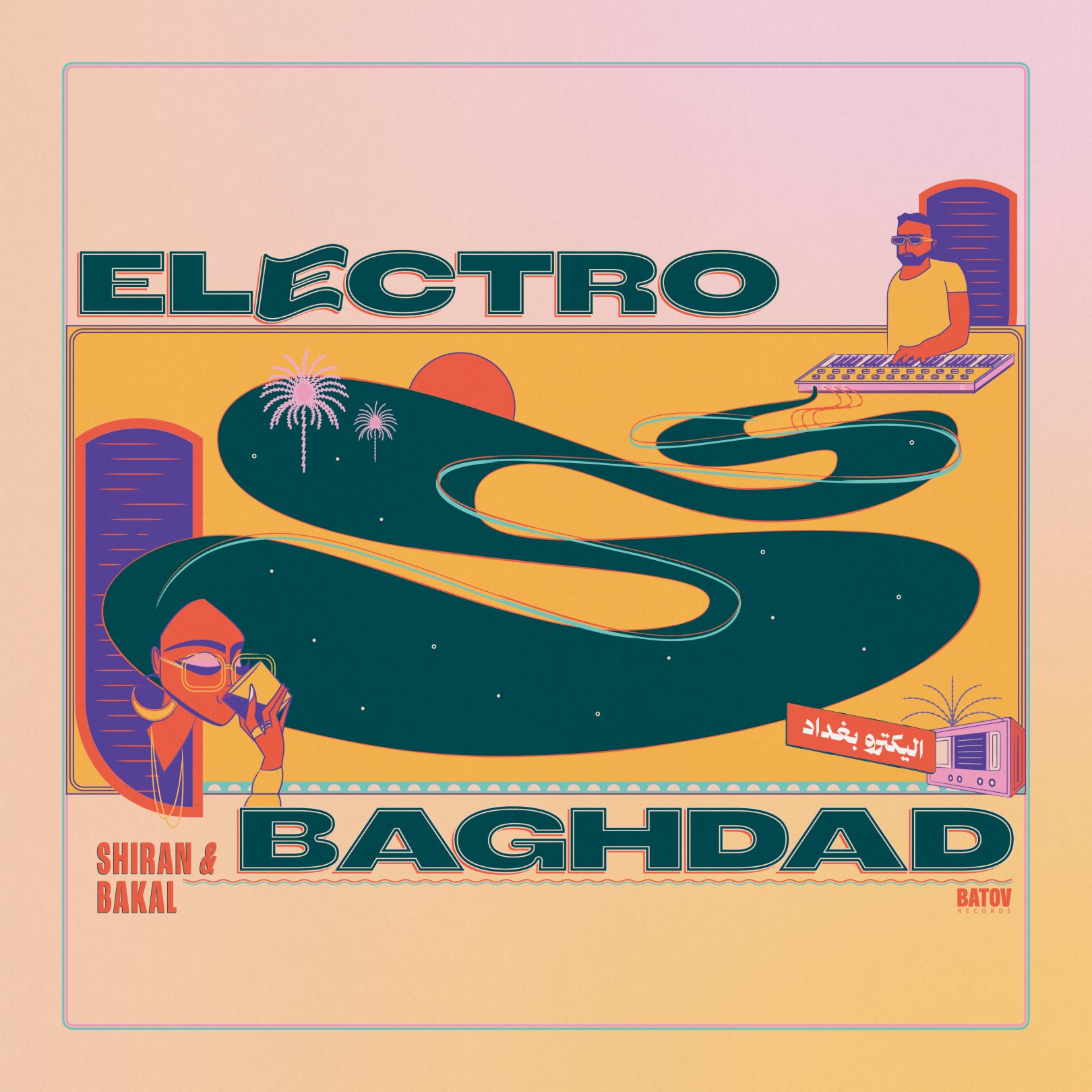
Today, we’re showcasing the new album by SHIRAN and Bakal. Following on from their self-released 2023 debut EP’ Electro Hafla’, and building upon SHIRAN’s solo work. The duo recently shared their deeply personal collaborative album, ‘Electro Baghdad’.
Without further ado, we’ll let the duo introduce the album, followed by the Bandcamp stream and their exclusive track-by-track guide.

The album Electro Baghdad was born from longing, heritage, and a renewed vision for tradition. It’s a project that bridges what we heard as children at home — songs our grandparents listened to, sang, and played — with the contemporary musical language we speak today.
We wanted to breathe new life into these songs: to preserve their original spirit and authentic lyrics while wrapping them in production that blends live instruments (like qanun, ney, and darbuka) with analog synthesizers, modern beats, and samples that tell a new story within something old.
Throughout the process, we also incorporated a women’s choir that added an emotional depth — an echo of mothers and grandmothers — and we approached each song as a unique creation, with its own arrangement and identity.
Here is the story behind each track:
1. Sghayiroun (صغيرون)
From the very first encounter with this track, its intimacy stood out—a soft, aching call to a distant beloved. We wanted to preserve its simplicity and emotional honesty, so we chose a minimalistic production approach. The arrangement is stripped down—no layers of live instruments this time. Just the sound of keys wrapping around the voice, almost like a breath. A gentle beat and warm bass support the flow without intruding, and the synths create an emotional space that feels more like an internal echo than a physical place.
“Little one, you are dearer to us than our own family” – a line that gently breaks your heart.
This is a song about love in separation, about longing that’s hard to bear.
The speaker promises to stitch his eyes shut until his beloved returns, and fears being burned by the pain of distance. This is a track built on quiet intensity. We wanted to let it breathe—to avoid weighing it down with anything that didn’t belong. In both the vocals and the production, we chose to listen rather than dramatize.
The result is an inward emotional journey—one that often finds its greatest strength in what’s not said and not played.
2. Alahudlak Yaba (عالهودلك يابا)
This track doesn’t waste any time—it kicks off straight into the beat. No intro, no buildup—just an immediate dive into the groove. From the first second, it pulls you in, and we chose to amplify that energy with a bold, confident bassline that drives the entire song.
We wanted to preserve the raw energy of Iraqi street-style folk singing—something direct, simple, and full of heart. The production combines a punchy, groove-heavy beat with Middle Eastern-flavored keys that bring a contemporary twist. A women’s chorus enters throughout the track, wrapping around Shiran’s voice and adding emotional depth—expanding the feeling of rootedness, tradition, and voices passed down through generations.
“Alahudlak Yaba” – a bold opening call, almost like something you’d hear at a wedding or a family celebration. The song speaks of a first love that still burns, of wounds that haven’t healed, and a plea to God for strength and forgiveness:
“Love is from God” – a reminder that the heart isn’t always under our control.
“The wound in my heart doesn’t heal.”
“May God forgive you, my love.”
This is a song of an open heart. It doesn’t hold back—it goes straight in, with a beat that lifts the room, but also with pain that lingers underneath.
This is exactly where folklore meets our groove: a blend of traditional vocals with contemporary electronic production—speaking the language of the past, but in a version that touches the audience of today.
3. Ah Ya Layla Yumma (آه يا ليلاه يمّه)
From the very first listen, we knew—this song was made for Electro-Hafla. The rhythm, the melody, and it’s raw street energy connect directly with the kind of sound and vibe we’ve been bringing to the stage in recent years.
We chose to preserve the atmosphere of the original orchestration—almost like a symphonic sample. It feels like a memory from the past, wrapped in a contemporary groove. We didn’t try to “modernize” it, but rather lift it up with production that respects the original while pushing it forward.
We added a keyboard motif that injects a vibrant energy into the track, alongside Bakal’s signature sound imprint—thick, groovy, and full of presence. It gets the crowd moving from the very first beat.
Beyond the groove, this is a song of deep heartbreak. The speaker’s heart keeps getting tangled up: “I fell in love, regretted it, and came back again.” He stitches his wounds, only to realize each new cut goes deeper. The recurring chorus cries out to the mother—”اه يا ليلة يمه اه ياحبيبه يا يمه – Ah ya Layla Yumma, ah ya Habiba Ya Yumma”—a tormented call that bridges personal longing with a deep sense of identity and family.
We layered in women’s vocals that evoke the voice of the mother and grandmother—not just as a nostalgic echo, but as an active part of the groove, present and pulsing.
At the start of the track, we sampled a recording of a conversation between Shiran’s father with her grandmother—captured on cassette tape in 1988, in the backyard of Shiran’s grandparents’ farm. They had chickens, geese, citrus trees, walnut trees..
We wanted the opening to feel like a real moment from that world—the warmth, the laughter, the simplicity of everyday family life. You can almost hear the sun and the breeze in their voices.
4. Ami Ya Bayaa Elward (عمي يا بياع الورد)
This song might seem soft on paper—but in reality, it’s one of the most direct and confrontational tracks on the album.
The structure is minimalistic, but the presence is undeniable: a deep, heavy bassline runs through the entire track, pushing the energy forward from start to finish.
Shiran’s vocals are right in your face—raw, unfiltered, and powerfully present. Almost like an emotional monologue bursting out. We didn’t try to soften or dress it up. Instead, we placed her voice front and center, letting the lyrics speak with full intensity. The synths and keys are minimal and precise—not taking up space, but rather acting like bare walls that amplify the truth inside.
The song is addressed to a flower seller—a symbolic figure loaded with meaning:
“Tell me, how much is the flower?” — a question that’s really about much more than price.
The line “Would you dare step on the flower?” is almost a challenge—asking whether there’s still room for emotion, truth, and beauty, or whether they’re being trampled on.
The verses warn: “Not every flower that’s called a flower actually smells sweet.”
In other words—what looks beautiful on the outside isn’t always pure on the inside.
This is a song about discernment, about emotional sensitivity, about taking responsibility—and about the pain that comes when someone crushes what matters most to you.
This track feels like standing face-to-face with someone—not flattering, not hiding.
The production supports that feeling: a minimal but powerful beat, a heavy bassline, and vocals that hit straight in the chest—not through the door, but straight to the heart.
5. Eshrab Kasak Wethanna (اشرب كاسك وتهنّا)
Like that first drink of the night—this track kicks in with a smile. We went for a groove that’s direct and to the point: heavy bass, warm beats, keys with a Middle Eastern touch—all delivered with a simplicity that feels confident and alive.
The vocals sit upfront—straightforward, celebratory, pulling you right in. It’s not trying to impress—it’s just there, present and working.
The production is built around minimalism with presence: a steady bassline throughout, flowing rhythm, and layers of electronics that create a sense of warmth without overwhelming. In some moments, we added a background women’s choir—not dominant, but like a wink to the collective spirit, to the feeling of togetherness that hovers over the track.
“اشرب كاسك وتهنّى Eshrab Kasak Wethanna” – “Drink your glass and enjoy it” – is not just an invitation to celebrate, it’s a philosophical statement disguised as a party.
Drink what life has handed you—even if the glass is bitter. Savor the moment, don’t run from it.
The song is about accepting what is. About not being ashamed of pain—“Don’t rush, just be patient… the nights will get used to it, inshallah.”
There’s deep wisdom here: pain is part of life—but even from that, joy can emerge.
“For your eyes, I left everyone,” the speaker says. And then turns to his friends: “Tonight is beautiful, and sitting with you—it feels like heaven.”
This is a track that bridges joy and healing, personal pain and collective release.
It’s not a party that denies the darkness—it’s one that says: only when you accept what is, can you truly raise your glass.
6. Alamtni Shlon Ahibak (علمتني شلون احبك)
This track feels like the soundtrack to an emotional night on the dancefloor—wrapped in a retro-disco sound, with a steady beat and a strong bassline that carries the song from start to finish.
We wanted the lyrics and vocals to take center stage, so we chose a minimalistic yet atmospheric production: warm keys, analog-textured synths, and hints of groove that bring back the feeling of classic disco—only in a world of heartbreak and longing.
Shiran’s vocals sit boldly at the center—unapologetic, almost confessional. She doesn’t try to beautify the emotion, she simply tells it like it is—and lets the rhythm hold it all together.
“Alamtni shlon ahebak” – “You taught me how to love” – but also: can you teach me how to forget?
This is a song about a relationship where you learned everything—beauty, and also pain. The paradise you painted for me—I never actually saw it, but the fire you brought—I felt every part of it.
As the song unfolds, the narrator gains clarity: they no longer believe the promises, they see through the game, and they’ve learned to draw boundaries—“This is where our story ends—each of us goes back to our place.”
It’s a goodbye that comes from maturity, not distance.
This track takes something deeply personal and dresses it in groove. It makes you want to move—but also makes you think. It’s not a lighthearted disco party—it’s a party made to release pain through motion.
Between the synths and the beat, between the vocals and the vulnerability—there’s a moment of truth here, wrapped in the sounds of something that once was, returning now in a deeper form.
7. Ya Hnayna Ya Yumma (يا حنينة يا يمّه)
This track opens with immediate emotion: a sample of the phrase “Ya Hnayna Ya Yumma”—a tender cry that feels pulled from the past—instantly draws you into a moment of deep longing.
Right after, a rich and emotional orchestral line enters, expanding the feeling and placing the song on the seam between intimate memory and collective nostalgia.
At the end of the track, we created a sense of “pulling back”—a moment where the innovative, present-day electronic arrangement slowly dissolves, as if being drawn backward in time. We wanted to create a feeling of transition—from where we are now, back to how this might have sounded and felt then. It’s as if the music itself is being absorbed into a memory, quietly and gently.
This is a song about a mother—but also about everything that motherhood represents: love, sacrifice, exhaustion, tenderness, strength, and quiet comfort.
“May God protect you, Mama,” “You went through so much, saw pain and injustice”—these are words of deep appreciation and acknowledgment for the one who stood silently by your side.
The speaker knows exactly who was always there for them—and fears the day she might not be anymore.
Personal Memory
I (shiran) remember this song from my childhood. At every family gathering, whenever this song played, my grandmother would stand up and walk to the dance floor. The whole family would gather around her—dancing, singing, and crying with her from pure emotion.
It was a moment that didn’t need words—only closeness, love, and a memory passed from one generation to the next.
The message is clear: a mother is an anchor of love, of rest, of roots. She is also a source of deep pain—precisely because she is so deeply part of you. This song sees that, honors it, and holds it with quiet gratitude.
