
𝙊𝙪𝙧’ 𝙏𝙧𝙖𝙘𝙠 𝘽𝙮 𝙏𝙧𝙖𝙘𝙠’ 𝙜𝙪𝙞𝙙𝙚 𝙨𝙝𝙚𝙙𝙨 𝙡𝙞𝙜𝙝𝙩 𝙤𝙣 𝙩𝙝𝙚 𝙨𝙩𝙤𝙧𝙞𝙚𝙨 𝙗𝙚𝙝𝙞𝙣𝙙 𝙨𝙤𝙢𝙚 𝙤𝙛 𝙤𝙪𝙧 𝙛𝙖𝙫𝙤𝙪𝙧𝙞𝙩𝙚 𝙖𝙧𝙩𝙞𝙨𝙩𝙨’ 𝙢𝙪𝙨𝙞𝙘.
We love pulling back the curtain on the stories and inspirations behind intriguing new releases. It’s always fascinating to hear the personal anecdotes, creative processes, and little-known tales that shaped each track. These insights not only deepen our appreciation for the artistry behind these musical gems but also help us connect with the artists.
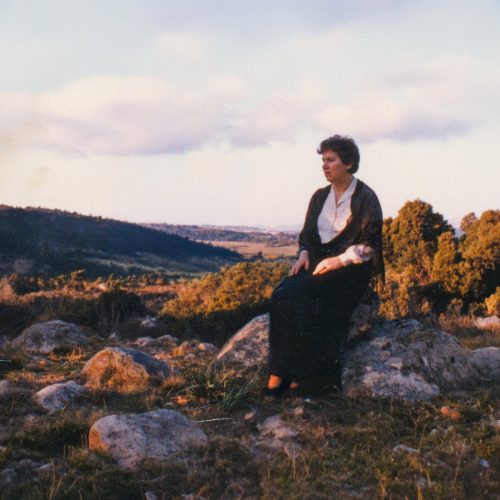
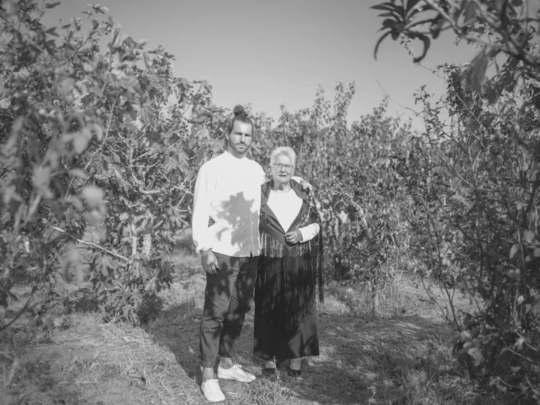
Vieri Mura‘s Rundinas grew from a beautiful cross-generational encounter with Maria Teresa Pirrigheddu, the iconic voice of Gallurese cantu a chiterra from northern Sardinia.
Now in her eighties, Pirrigheddu still sings with the grace that defined her youth, though her voice has taken on new fragility and depth with age. After meeting her while studying Sardinian traditional music, Mura returned again and again to her countryside home, where singing became part of everyday life—alongside making ravioli, picking figs, and sharing quiet moments.
Over time, Mura began layering subtle, almost whispered compositions beneath her orally transmitted melodies. Swallows, or rundinas, recur throughout the record as a symbol of passing seasons and fleeting youth, giving Maria Teresa’s familiar cantos a renewed emotional weight.
In the track-by-track guide below, Mura walks us through the newly released album, sharing the stories, memories, and musical ideas behind each piece.
A1
A sas rundinas (In sa domo de campagna)
To the swallows (In the country home)
This poem by Paulicu Mossa, Maria Teresa’s favourite poet, is the opening and closing theme of the record. The poet welcomes the swallows and waits for them to return to his country home. Maria Teresa sings it as a cantu in re, which is the main module that generates the cantu a chiterra tradition, and one of the most difficult. She first sings it alone, among the sounds of her garden, as she did when she was young.
—
A2
Rundines chi ‘olades
Swallows that fly
Originally a work song of Sardinian washerwomen, this chant is called cantu a boghe ‘e riu: literally “voice of the river”. It is a song for a love that is very far away, in which one asks the swallows to lend their wings, and lights a candle on the balcony on the nights when the moon hides. The unique melody with which Maria Teresa sings it deeply moved me from the very first listen, making this chant one of the very first I wanted to work on, and still perhaps my favourite on side A of the record.
—
A3
Innozzente rundinella
Innocent little swallow
Every track on the record features a different module of the cantu a chiterra tradition. This chant is a cantu in fa diesis, and is an excellent example of Maria Teresa’s passion for poetry. The text is in fact not among the most famous; we chose it by consulting S’Ischiglia, a great anthology of Sardinian poetry that Maria Teresa keeps with care, full of little strips of paper as bookmarks. Compositionally it is one of those I am most attached to, because it has kept a sense of ancient and familiar simplicity, and has become a delicate and sensitive synthesis of our two different musical worlds, represented throughout the record by Maria Teresa in the melody, and by me in the harmony.
—
A4
Imbasciada
Embassage
This module is instead called cantu a sa nuoresa, typical of the Nuoro area, and we therefore chose to sing it with a poem by Peppinu Mereu, from nearby Tonara. Although it is a love poem, in which the poet makes the recurring theme of the messenger swallowing his own, Peppinu was in fact a disruptive and subversive figure. He was the first Sardinian socialist poet, always balancing between intense lyricism, at times jovial humour, and cutting satire against power and inequality.
—
A5
Sa rundine passizzera
The passing swallow
I love this track for several reasons, among them the fact that the words are by the great poet Giuseppe Raga, sung on the traditional module of the cantu in si bemolle, but above all the extreme concision in which everything begins, unfolds and ends in less than a minute, and yet with great intensity. And it is precisely this intensity that Maria Teresa feels immediately, and at the end of the recording she lets slip a very rare, enthusiastic comment on the performance, whispering with emotion: “Bella…”.
—
A6
Margaretina dopia
Double little daisy
The story of this piece is special to me. While formally it is a variation of the cantu a boghe ‘e riu module, what struck me was its origin. The text is sweet, yet symbolic and dark, and Maria Teresa recounts having heard these words sung by an older woman when she was young, whose name and village she does not remember. Beyond the strong suggestion that the mysterious origin of these words has on me, I believe that in this simple and true story lies much of the meaning of tradition, and of the power of oral transmission.
—
A7
Una boci una chitarra
A voice a guitar
While the other pieces are in Sardinian, a language Maria Teresa knows well since it is fundamental to the cantu a chiterra tradition, this track and the two that follow are in Gallurese, her native language. This serenada is special first of all because it is one of the melodies Maria Teresa sings most often and most willingly, but also because it is the only piece in which I sing the words together with her, words that speak of the pains of love, and on which I decided not to leave her alone.
—
A8
Lu pintimentu
The regret
Here is the piece that inspired the concept of the whole record. The words are a personal selection by Maria Teresa of verses by the greatest Gallurese poet, Don Baignu Pes. He was a noble and wealthy priest with an uninhibited private life, and he composed many love poems. This one, however, is among his last; it’s titled The Regret, and it paints with great sadness the end of spring as a metaphor for lost youth, wasted time, and looming death. The first time I heard Maria Teresa sing these words, with a voice steeped in the splendor of a former time, but hoarser and veiled by age, I was petrified. I thought everything was already in there, and once I got home, I immediately set to work. This was therefore the first piece on which I experimented harmonically, and I think you can hear it, since the reharmonization is perhaps the most adventurous of the whole side A.
—
A9
Benvinuta bona gjenti
Welcome good people
While all the other words come from great Sardinian and Gallurese poets of the past, or were handed down orally, the verses of this song were written specifically for Maria Teresa’s voice by the poet Franco Fresi, from her own town. The poem is a fraternal and affectionate cantu de saludu, a welcome. The final verses, which Maria Teresa varies each time to introduce the guitarist accompanying her, read: «And with words and songs my voice greets you, and together with Vieri we welcome you». Having no idea she did this, I cannot say how moved I was the first time she sang my name, introducing me together with her.
—
A10
Passu
Step / Walk / Passage
The chant of welcome ends, but there is no festival anymore; it is over, perhaps for years. Silence falls, and Maria Teresa is once again alone in her garden. So she starts walking, as evening falls and the wind rises, toward her church. Upon entering, she hears bells and a mass, and yet all one hears is a single voice from the back of the church saying, confused: “There’s no one here”.
—
B01
A sas rundinas (In cresia)
To the swallows (In the church)
Here again are the same words that open the record, the invocation to the swallows that no longer return. Intoning the traditional theme of the lairò, Maria Teresa sings the entire poem in a single breath, for thirteen minutes, while the organ slowly evolves beneath her sad tale. I worked on the organ writing for years, wanting a worthy ending for this record. When I felt ready to let it go, I was with Maria Teresa on a freezing cold day in January. Then I captured the final version and let her hear the whole record for the first time.
