
𝙊𝙪𝙧’ 𝙏𝙧𝙖𝙘𝙠 𝘽𝙮 𝙏𝙧𝙖𝙘𝙠’ 𝙜𝙪𝙞𝙙𝙚 𝙨𝙝𝙚𝙙𝙨 𝙡𝙞𝙜𝙝𝙩 𝙤𝙣 𝙩𝙝𝙚 𝙨𝙩𝙤𝙧𝙞𝙚𝙨 𝙗𝙚𝙝𝙞𝙣𝙙 𝙨𝙤𝙢𝙚 𝙤𝙛 𝙤𝙪𝙧 𝙛𝙖𝙫𝙤𝙪𝙧𝙞𝙩𝙚 𝙖𝙧𝙩𝙞𝙨𝙩𝙨’ 𝙢𝙪𝙨𝙞𝙘.
We love pulling back the curtain on the stories and inspirations behind intriguing new releases. It’s always fascinating to hear the personal anecdotes, creative processes, and little-known tales that shaped each track. These insights not only deepen our appreciation for the artistry behind these musical gems but also help us connect with the artists.
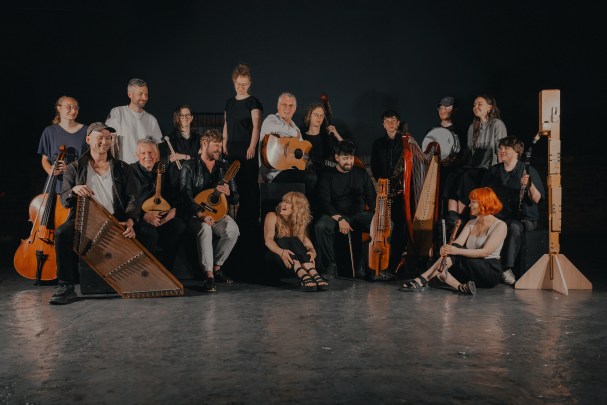
Concord, is the second album from Sheffield-based improvising ensemble Emergence Collective. Recorded at Yellow Arch Studios with ten musicians, the five tracks move between intricate rhythmic patterns, slowly unfolding textures, expansive melodies and more ambient moments. Although the music draws on minimalist processes and repetition, nothing is predetermined. Every track is improvised, with the music taking shape through the relationships between the musicians in the room. There are no overdubs or studio trickery: what you hear is what happened in the studio, and it will never happen in quite the same way again.
Out today via Dwell Recordingss, Concord finds the ever evolving collective at their most ambitious yet. Stream the album below, then explore their exclusive track-by-track guide to the record.
1. In the clearing
Opening with a solo hammered dulcimer figure from Zebedee C. Budworth, In the Clearing gradually unfurls as fragments of violin, nyckelharpa and other instruments enter the texture. The repeating rhythmic pattern provides a foundation for the ensemble to build around, with melodic lines appearing, intertwining and passing between musicians. There is a wonderful sense of space and restraint here, as the music slowly gathers momentum without ever feeling hurried.
We’re all massive Steve Reich heads, so it seemed apt to start the album with that most Reichian of devices, the left handed paradiddle. From this simple starting point, the other instruments slowly announce themselves. Fragments of violin give way to a nostalgic, yearning melody, joined by the nyckelharpa and a softer clarinet texture from Laura Hegarty. The ensemble gradually weaves around these initial lines, The second half of the track sees melodies from the recorder (Juliana Day) and marimba (Oli Julian) come to the fore, leading a new wave of melodic patterns. The way that the instruments take turns being a sort-of glowing panel amidst the fabric of this track make it really special.
2. In the deepest cavern
A shift into darker territory, beginning with the low, fractured sound of Juliana’s Paetzold contrabass recorder. The instrument has a distinctive square-shaped design, developed in the mid-twentieth century with inspiration from Renaissance organ pipes. The recorder’s rich overtones and breathy, elemental sounds create an atmosphere of depth and mystery. Other instruments gradually drift into the space around it: little flutters, drones and water dripping from stalactites (Manon McCoy on the harp). Plucked and hammered strings from the Spanish laúd (Tom Caunt) and hammered dulcimer (Zebedee C. Budworth) add to the rich texture.
A slow, brooding pulse begins to emerge, eventually developing into a more insistent rhythmic pattern. The music has a sense of movement and exploration, like footsteps descending into an unfamiliar landscape. As the piece progresses, the texture becomes more open and the rhythm more pronounced, with the ensemble finding an increasingly playful energy within its darker atmosphere.
In the second half, the recorder takes centre stage for a while, underpinned by a litany of pizzicato plucks and staccato breaths from the ensemble. The pace picks up as the track draws to a close, moving from footsteps treading to a clock ticking down on the piece’s lifespan. Texturally, this track feels more open than the first track, with less density in the ensemble playing albeit no less feeling.
The track titles for this album were dreamt up by co-director Jemma Freese, and for her it evokes a journey into the depths of a cavern, where strange sounds and creatures emerge from the shadows.
3. My reflection looks different this time
This track has a thicker, denser texture coming about from long-note playing from the whole ensemble. The effect is sort of like a groundswell, from which patterns emerge from the undergrowth. The piece evolves into something with a very distinct rhythmic articulation. The patterns have a real process to them- you hear them develop in real time. It reminds Rob of Reich’s Music for Mallet Instruments, Voices, and Organ, one of his 1970s works, in which it is very easy to hear the minimalist patterns unfold.
The way the musicians enter one by one gives the piece an almost orchestral quality, despite the fact that everything is improvised. As the layers accumulate, repeating patterns begin to take shape, building into a joyful and increasingly rhythmic passage. A shift in the bassline from Philippe Clegg at 8:25 subtly transforms the feel of everything around it, opening up new possibilities before the ensemble settles into a warm, expansive closing passage.
4. To tread ground we know well
At just over 21 minutes, this is the album’s longest track, and one to get comfy with. This starts with a gorgeous introduction by Rhiannon Scutt on the tenor sax with a wandering, wistful line, soon joined by graceful, cascading harp arpeggios played by Manon McCoy. It’s lush to hear these two instruments in dialogue with each other for so long, uninterrupted. The fabric of the music develops into a major key idea, which moves through a simple but majestic harmonic sequence articulated by the double bass. There’s a lovely harmonic tension running through the piece, with the music hovering around chords that never quite settle on the expected home note.
The string melody ascends and descends – it has a lot of vertical movement. At 13 minutes in, you hear the violin and the nyckelharpa in canon with each other. There’s a distinctly Reichian quality to the interplay between the strings, eventually joined by the undulating pulses of the dulcimer.
As the track unfolds, the bass gradually drops away and the music starts to feel less grounded, as though the path is opening out into something else. Around the halfway point, the instruments holding down the tempo begin to melt away, leaving little fragments and shards of sound behind.
5. Concord
A much shorter, more ambient track that sees the ensemble’s instruments in turn shift to the fore, and then recede. This was a result of a series of musical games to get our creative juices flowing- most didn’t make the cut of the final release, but this one did. I think you hear everyone tuning into the idea of ambience, as if some of Brian Eno’s music was being refracted through the collective’s musical language. You hear exactly the right amount of everyone – it is a beautiful unit of music, more than the sum of its parts, which really sums up Emergence Collective perfectly. After the previous four tracks, this is the coda to the album – a moment of sublime reflection, a final breath before whatever comes next.
