

𝙊𝙪𝙧’ 𝙏𝙧𝙖𝙘𝙠 𝘽𝙮 𝙏𝙧𝙖𝙘𝙠’ 𝙜𝙪𝙞𝙙𝙚 𝙨𝙝𝙚𝙙𝙨 𝙡𝙞𝙜𝙝𝙩 𝙤𝙣 𝙩𝙝𝙚 𝙨𝙩𝙤𝙧𝙞𝙚𝙨 𝙗𝙚𝙝𝙞𝙣𝙙 𝙨𝙤𝙢𝙚 𝙤𝙛 𝙤𝙪𝙧 𝙛𝙖𝙫𝙤𝙪𝙧𝙞𝙩𝙚 𝙖𝙧𝙩𝙞𝙨𝙩𝙨’ 𝙢𝙪𝙨𝙞𝙘.
We love pulling back the curtain on the stories and inspirations behind intriguing new releases. It’s always fascinating to hear the personal anecdotes, creative processes, and little-known tales that shaped each track. These insights not only deepen our appreciation for the artistry behind these musical gems but also build a connection with the artists.
Late Aster, the San Francisco Bay Area duo of Aaron Messing (trumpet, composition, production) and Anni Hochhalter (French horn, vocals), recently shared their second album, Recall, Recall, via Delos.
Both are classically trained brass players who run their horns through electronics until the processed lines become the songs’ skeletons, with beats and texture built around them. Messing describes each track as vacuum-sealing influences that never recur: a chord progression from a Tigran Hamasyan solo piece, the structure of a Son Lux ballad, and arrangement ideas lifted from a Shostakovich quartet ( the fabulous ‘Confidently Incorrect’).
This is my first time hearing Late Aster, and I’m pretty impressed by how easily they blend all manner of styles into one cohesive sound across the album’s ten tracks.
As John Baccigaluppi from Tape Op Magazine said about their genre-jumping style, “on paper it shouldn’t work, but it does. “
Musically, they sit between the ambient electronic vibes of ‘Red Wednesday‘, the expressive chamber jazz of ‘Someday‘, and the blissful folk balladry of ‘Inquiry’, and beyond, yet wherever they go, it never feels like a simple blend of styles, more like a free-flowing shared instinct for space, texture, and quiet emotion.
Stream the album below, and as you do, check out their exclusive track-by-track guide.

Red Wednesday
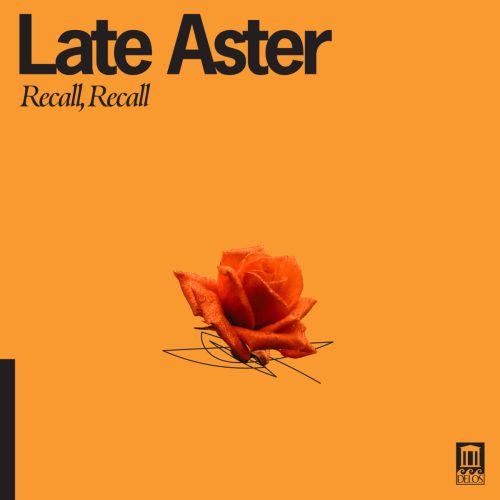
This song used to be called SF2020 because we started writing it during the pandemic, and its chaotic pulsating sound seemed to capture that crazy time. Red Wednesday was a particularly notable day from that notable period because nearby wildfires caused the skyline to turn a pale orange/red (hence the album artwork). The core of the arpeggiation sound is chopped up phased-French horn longtones that were the germ of idea that expanded into the project of Late Aster and the explicit goal to lean heavily into using studio tricks to feature electrified brass instruments in art pop songs.
Someday
As with all our songs, many individual components of Someday are based on explicit references to our pantheon-level favorite music. E.g., the bassline is a trumpet running through a synth pedal two octaves down trying to emulate the upright bass in Miles Davis’ Someday My Prince Will Come. And the structure of the song was a nod to the structure of Dirty Projector’s Gun Has No Trigger. Maybe Aaron’s favorite part of the whole album is his vocal harmony line that leans into dissonance at the climax of each iteration of chord progression (e.g., 0:47-0:56).
LFHH
We’ve been trying to write a song as good as The Album Leaf’s Malmo for our entire musical lives—LFHH is the most recent (but likely not last) unsuccessful attempt. But every time we try, we learn something valuable about ourselves, and this song turned out really interesting and beautiful, regardless.
Rhinestone
Rhinestone was supposed to be completely different, maybe like a house beat jam, but it morphed into something more ‘00s indie along the way. We left remnants of the previous iteration of the song we had made before at the very beginning as a reminder of the way music can be reborn and revitalized by a new good idea. Fittingly, the piano/trumpet coda at the end was just a demo of the song as it made its journey from house to indie. It’s a different tempo and everything.
Reconciliation
You don’t often hear a sensory percussion drum solo in pop songs. That moment, paired with some vocal magic from a collaborator, Arielle Kasnetz, is one of the hidden gems of this album to us.
Inquiry
This is our Like Spinning Plates. But unlike with our other songs, we weren’t actually aiming for that vibe, which in hindsight feels like the secret to unlocking the disorientation and beauty that Radiohead was able to capture. It just happened as things were coming together, and the cacophonous modular effects we were using on the Empress Effects Zoia fused the concept together.
Confidently Incorrect
This song is just goofy. It could be the title track on our engineer Charles’ next album Charles’ Favorite Fart Sounds. Random French horn fanfare in there as well. Solid.
Four Times
Our producer and mastering engineer Mark Yoshizumi calls “Four Times” the band’s Michael Andrews’ “Mad World”—aiming to balance the absurdity of life’s conflicting emotions: nostalgia and mourning, love and heartbreak, comfort and despair. “And I find it kind of funny. I find it kind of sad…”
MarkIO
This is our headbanger finale. The climax of the song probably has 8 layered Crumar synths from the Tiny Panther Studio’s vault in Brooklyn, NY.
Someday (Reprise)
We were sitting around listening to Someday and soloing/muting various tracks. With just the vocals and acoustic guitar isolated, there was something so sweet and compelling. The idea to release a reprise came about in this moment of listening and playing around.
