

This week’s guide is by CF Smith and contributors: Words By Shoaib, Neil G, Gavin Senaratne and Irfan Ayaan.
Another Friday rolls around, bringing a fresh edition of Between The Cracks packed with must-hear releases. We’ve loved these albums lately and think you will too! This week, we’re tuning into music from KOMA, Alex Chang, Danny Keane, Martina Liviero, and more. If you find a album you adore, consider snagging a copy. Supporting artists and labels never goes out of style!
Albums
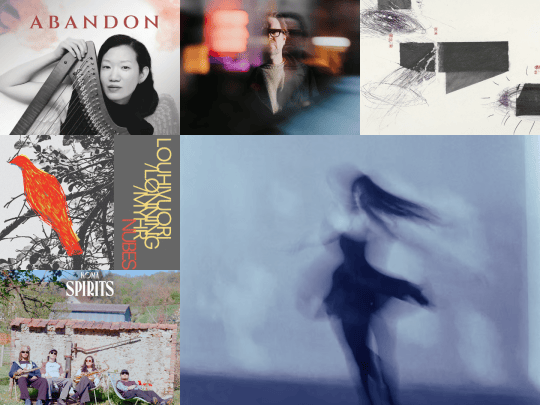
KOMA – SPIRITS
Spontaneity is impossible to fake. Brought together by Antoine Rajon for the KOMOS label’s Analog Home Session series, Parisian quartet KOMA set up in a Burgundy living room and cut SPIRITS straight to half-inch tape. One take. No edits. No safety nets. Opener ‘SPIRITS 1′ sets the mood through pure collective improvisation. Nobody rushes. Without a drum kit to anchor tempo, Anthony Jouravsky‘s double bass provides steady acoustic gravity, while Keïta Janota‘s biting alto tests the room’s air with searching phrases alongside Martin Blouet‘s vibraphone tremors. Their stark cover of Bill Lee’s ‘JOHN COLTRANE’ subverts expectations entirely. Rather than chasing athletic speed or explosive solos, KOMA reimagines the tune as a hushed ambient prayer. Ornella Noulet‘s smoky tenor saxophone hovers over shimmering metal chords, letting the melody float and linger like smoke in the room. On ‘INNER MEETING’, composed by vibraphonist Blouet, the quartet leans into gentle, meditative counterpoint. Soft mallets dance across ringing bars while both horns trace patient, intertwining arcs. They listen intently to one another, proving that negative space can hit just as hard as any heavy rhythm section. On ‘Spirits 2′, which acts as a bookend to the opening track, you hear how the quartet’s musical dialogue has shifted over the course of the continuous session. SPIRITS captures four musicians discovering a shared language in real time. Modal jazz stripped bare of modern studio tricks, it finds rare emotional weight and timeless beauty in open acoustic space. – WBS
Alex Chang – Abandon
Harp lines unwind in soft, glowing threads, opening up a space that feels close and quietly expansive. Alex Chang pulls in her Rock Falls Trio bandmates Adam Forman (drums) and Jason Hadron (bass), who add their own shade to the palette. Abandon catches Chang using effects, multi-tracking, and looping to blend free jazz, indie folk, and classical into something immersive and beautifully absorbing. “Abandon is a very intimate kind of album, and it’s meant to be sat with and listened through from beginning to end,” Chang says. “There are little Easter eggs throughout, like the solo, duo, and trio versions of ‘Rain’ sprinkled throughout. And I foreshadow the appearance of those themes, interwoven with the improvisations. It’s not a listening experience that arcs like a parabola; it’s episodic, an undulating landscape. When ‘A Love As Deep’ returns at the end, it communicates closure, moving on from a love that didn’t work out.” Without a doubt, Abandon is an enchanting listening experience. – CFS
Louhivuori / Lønning / Myhr – Nubes
Finnish drummer Olavi Louhivuori joins Norwegian trumpeter Eivind Lønning and guitarist Kim Myhr for Nubes, an adventurous debut captured during their first performance together at the We Jazz Festival in Helsinki in December 2021. The album unfolds across five pieces: ‘Stratus‘, ‘Cirrus‘, ‘Arcus‘, ‘Fractus‘ and ‘Nimbus‘. The cloud-inspired titles suit music that feels constantly in motion and atmospheric in every sense. Louhivuori’s drums provide momentum without forcing the trio into a conventional groove, while Lønning’s trumpet and Myhr’s guitar give the music an airy, spacious character. The album primarily focuses on three musicians listening to and reacting to one another as the sound slowly expands. At almost sixteen minutes, ‘Arcus’ forms the centre of the record and gives the trio their widest canvas, but Nubes works best when approached as one continuous journey. Across its 42 minutes, intensity accumulates patiently rather than arriving through sudden dramatic shifts, preserving the organic quality of the live recording. Nubes feels remarkably assured, considering it documents the trio’s first time playing together. Spacious, exploratory and difficult to pin to one genre, the album rewards listeners willing to follow its slow-moving currents. For fans of free improvisation and atmospheric avant-garde jazz, Nubes is an understated but absorbing debut. – GS
Christer Bothén / Oren Ambarchi /Johan Berthling / Andreas Werliin – Serpentine
Serpentine brings Christer Bothén together with Ghosted’s Oren Ambarchi (guitar), Johan Berthling (bass) and Andreas Werliin (drums) for four long pieces built on hypnotic loops and slow‑shifting harmony. Bass clarinet and donso n’goni tones coil around guitar, bass, and drums, blurring minimalism, spiritual jazz, krautrock‑style repetition, and drone. No lyrics are sung, but the music carries strong narrative weight. Each track feels like a wordless ritual, with motifs repeating like lines in an incantation. The title track and Antigorite move in patient arcs, where subtle changes in phrasing and timbre act like unspoken verses. Lizardite and Chrysotile tighten the rhythmic focus, riding grooves that suggest communal trance more than a solo showcase. Without text, the emotional content arrives through dynamics and texture: moments of sparse, almost whispered playing feel confessional; denser passages feel like collective affirmation. It is music that asks you to listen as if the instruments were speaking, even when they refuse to articulate words. – IA
Danny Keane – Kinesis
Kinesis moves with the excitement of a musician finally allowing every influence to speak at once. Danny Keane threads European jazz, electronics, krautrock, Indian classical rhythm, ambient space, and modern improvisation into six compositions bursting with motion. On his second album, like his debut, Keane continues his relationship with the father of Ethio-jazz, Mulatu Astatke, while also paying tribute to artists like Anoushka Shankar and Nitin Sawhney. Keane’s curiosity about jazz and the freedom the genre offers, coupled with meeting Mulatu, has helped shape Kinesis. “Mulatu’s commitment to having your own voice is really brilliant. Coming up through a standard Classical music education in this country, you focus on the curriculum; there’s less emphasis on finding your own approach. I thought there was only one way things needed to be.” The album is full of different shades of jazz from a musician who sees no boundaries in his musical escapades. Running immediately sets the album in motion with a restless piano rhythm, while Cathartic Chaoserupts into a thrilling exchange between electronics and Adnan Joubran’s oud. Time To Go brings everything gently back to earth with a tender, reflective finale. The album feels restless without becoming overwhelming, balancing precision with genuine release. Listening to it feels like travelling quickly through unfamiliar sonic landscapes, then suddenly realising the journey has become deeply personal. – NG
Martina Liviero – Formas al Desaparecer
Written between 2020 and 2024 and guided by the poetry of Louise Glück, Formas al Desaparecer explores the quiet act of dissolving into one’s craft. Argentine composer Martina Liviero recorded primarily in Belo Horizonte, Brazil, with producer Rafael Martini, steeping her chamber folk in the wooden warmth of custom Uakti marimbas. On ‘florecer ‘, guest clarinetist Joana Queiroz weaves through Julian Shore‘s piano chords like morning mist over hills. Her warm, woody tone pairs with shifting harmonies that recall the golden era of Clube da Esquina, turning a five-minute bloom into pure, unhurried reverie. ‘dónde’ turns inward to examine emotional distance and displacement. Martin Nevin‘s woody upright bass anchors the bottom end, while Will Graefe‘s electric guitar notes flicker like distant headlights across an empty highway. Liviero’s hushed Spanish vocals ask questions without needing tidy resolutions. ‘hilo azul’ hangs by a delicate thread of nylon-string fingerpicking. It pairs acoustic arpeggios with ghostly electric swells, pulling loose fragments of memory into a single braid. Nothing feels rushed. The negative space breathes on its own terms. Closer, ‘refugio’ offers gentle sanctuary. The arrangement strips back to bare essentials, pairing soft vocal whispers with subtle acoustic chords. Each note decays naturally until the music dissolves into the room’s quiet air. Formas al Desaparecer succeeds because it treats vulnerability as composition. By letting her songs evaporate rather than resolve, Liviero delivers a rare debut that lingers in the chest long after the sound fades. -WBS
