

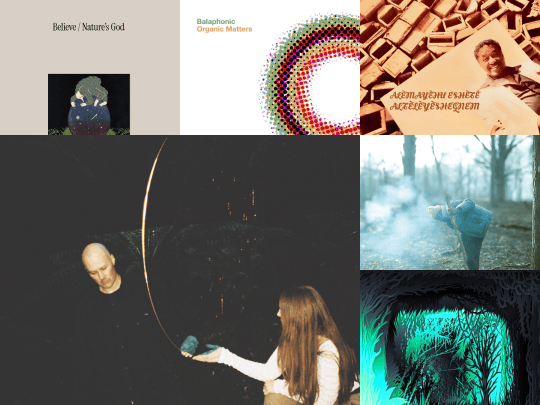
This week’s guide is by CF Smith and contributors: Arifur Rahman, Words By Shoaib, and Benny Thomas.
Hello, hello, Between The Cracks is here! Each week at Twistedsoul, we showcase six of the most interesting discoveries on our travels. We scour high and low, always roaming across the musical spectrum to bring you releases that might have flown under your radar. This week, we’re highlighting new albums from Troth, Uroboro, Believe, Balaphonic and more. Lend an ear to the music, and if it strikes a chord, show some love by supporting the artists and labels.
Albums
Troth – The Limits Of A Light Touch
Troth‘s The Limits Of A Light Touch finds Amelia Besseny and Cooper Bowman moving toward their most direct version of sideways pop yet. Ambient-pop, trip-hop haze, art-rock looseness, and electronics create a sound that feels familiar yet out of reach. The album is shaped by listening, but never trapped by nostalgia. ‘In Essence’ opens the album with a quietly assured statement, pairing Besseny’s soft, layered vocals with Bowman’s minimalist electronic arrangements to sketch its core sonic identity. ‘Found Ring’ carries a beautiful, unsettled quality, balancing blurred textures with a melody that seems to appear and disappear at the edges. A looseness keeps the track from settling into indie-pop, giving its warmth an unusually strange character. Next is ‘Shaking Light‘. This track carries a warm echo of the Tara Clerkin Trio, not as an imitation, but in the way it shares that same gentle curiosity and softly experimental, slightly art-pop glow. ‘Burrows’ leans into ethereal folk, pairing delicate atmosphere with an off-kilter sensibility. ‘Incanta’ is a vibrant, electro-pop track that captures a distinct pagan ritual energy that is channelled into a feeling of ecstasy. ‘Two Urns Mark The Way’, featuring Owen Lawrence aka The Dengie Hundred, takes the album somewhere darker, using dubbed experimentalism and runtime to stretch its tension. His contribution makes the world feel like it’s opening outward. The album’s greatest strength is how naturally these influences coexist. Troth never recreates their references; they absorb them into something personal, fluid, and unmistakably DIY. The result is a beautifully strange record that rewards repeated listening. – WBS
Marvin Tate ft LeRoy Bach – Controlled Burn
Controlled Burn feels less like a conventional album than a vivid conversation caught in motion. Chicago poet and multidisciplinary artist Marvin Tate and longtime collaborator LeRoy Bach build these twelve pieces from improvisation, instinct, and a shared willingness to leave edges unresolved. The result is intimate, restless, and surprisingly cohesive. Opening with ‘Up At 6′, Tate and Bach establish the album’s hazy atmosphere. The track feels suspended and intimate, with Tate’s distinctive voice emerging through a shifting instrumental backdrop. It is a restrained introduction that quietly sets the tone for everything that follows. ‘Hold Me’ takes that intimacy further, packing emotional weight into just over a minute, while ‘Love Bass (I Was Hoping)’ settles into a deeper, murkier groove. Its bass-driven foundation gives Tate room to turn inward, before the abrupt ending leaves the song hanging in the air. The brilliant ‘Genius Shit ‘is another reminder that few artists inhabit spoken word with such effortless authority. ‘First You Hear ‘ weaves Tate’s rhythmic, narrative vocal delivery paired with Bach’s sparse, textured instrumentation. Controlled Burn works because its fragments never feel disconnected. Tate’s restless delivery and Bach’s adventurous arrangements allow ambient haze, darker textures, rhythm, and spoken word to coexist naturally. Brief, exploratory, and deeply personal, it is a record that rewards listeners who experience its twelve pieces as one continuous conversation. – WBS
Uroboro – Outside
Outside by jazz collective Uroboro is a stunning masterclass in avant-garde storytelling, seamlessly weaving together the avant-garde traditions of spiritual jazz and spoken word. Led by saxophonist and poet Keith Jafrate, the eight-track album features four vocal and four instrumental pieces. Alongside Jafrate, you’ll find Faith Brackenbury (violin & voice), Laura Cole (piano), Michael Bardon (bass), Anton Hunter (guitar), Johnny Hunter (drums), and John Pope(bass). Tracks like ‘winter dusk spell‘, ‘a spell to unknot buds‘ and the epic jazz-rock gothic opera ‘Imagine A Forest‘ are undeniable highlights, all featuring the melodically superb and joyously dynamic vocals of Brackenbury. The brilliant instrumental ‘hobgoblin‘ is another masterful piece. Sax, bass, piano and guitar all wobble into each other, weaving a beautifully crooked groove that feels like it’s about to fall apart but never does. Album closer ‘The Sky Is Always Open‘ is a real standout, with Jafrate and Brackenbury coming together – Keith all brooding, Faith more loose. It all unfolds in a wide‑open atmosphere that echoes the album’s title. Outside shows once again just how wide Jafrate’s jazz vocabulary stretches. – CFS
Believe – Nature’s God
Believe is an interesting Australian proposal, and they are back with their second album, Nature’s God. Based in Sydney, the group features Peter Farrar on saxophone, Novak Manojlovic on piano, Clayton Thomas on bass, and Laurence Pike on drums. The album is described as “a bold meditation on the beauty of human existence, free jazz, and our connection to the planet.” Their music turns free jazz into collective upheaval: dense improvisation, scorched textures, and volatile momentum colliding in real time. The epic (title track) opens the album with a slow-burning, ritualistic spell. Manojlovic’s piano, Thomas’ bowed bass, and Pike’s finely tangled percussion begin in hushed, uneasy conversation, steadily ratcheting up the tension before Farrar’s elongated, drone-like saxophone tones enter the fray. Elsewhere, the quartet moves between ecstatic release (‘The First Name Of A Flower‘) and tense restraint (‘Earth Does Not Need Us‘), channelling European free improvisation and radical jazz with a raw, contemporary urgency. If you’re looking for some new jazz to take you into the weekend, then look no further – because this one ticks all the boxes. – CFS
Reissues
Alemayehu Eshete – Alteleyeshegnem (reissue)
Widely known as the Golden Voice of Ethiopia, Alemayehu Eshete has been a defining figure of Ethio-soul since his first hit single, “Seul”, in 1961, absorbing the energy of James Brown, Otis Redding and Wilson Pickett more consistently than any of his contemporaries and folding it into Ethiopia’s melodic traditions. This reissue pairs two highlights from his work with Philophon: ‘Alteleyeshegnem ‘, where the label’s house band rebuilds the funky classic around a driving beat, mystical harmonies and a pumping bassline while keeping faith with the original, and ‘Feqer Feqer Nèw’, which leaves the focus squarely on the phrasing and vocal control that made his reputation. Both sides have been specially remastered for the release, which grew out of a collaboration initiated by Listros e.V. Berlin, with support from the German Federal Cultural Foundation, thereby putting Alemayehu in dialogue with a younger generation of musicians. – BT
EP’s
Balaphonic – Organic Matters
Organic Matters has something wonderfully organic about it. Danny Ward’s Balaphonic project doesn’t seem interested in forcing its influences into neat categories; instead, Afro-Cuban rhythms, Brazilian jazz, Balearic warmth, downtempo textures, and deep-house sensibilities naturally find their way into the same musical space. The result is an EP that feels both carefully constructed and remarkably alive. ‘Dew Drops’, featuring Robin Dewhurst, immediately sets the mood. Built around a gentle samba shuffle, the track glows with picturesque piano, xylophone and balafon melodies floating above layered Latin percussion and a warm, rolling bassline. It is the kind of opening that invites you to stop whatever you are doing and listen. Movement fills the track, yet nothing feels rushed. Then comes ‘Switch‘, perhaps the most intriguing piece of the three. Originally composed by Ward in the mid-2000s, this new incarnation brings together legendary Brazilian vocalist Flora Purim and Diana Moreira Booker. Its 7/4 rhythm gives the track an unusual, almost hypnotic sway, while the restrained arrangement allows the voices and groove to breathe. It is a beautiful meeting of generations and musical histories. ‘Life of Strings‘ takes another turn, becoming more upbeat and dancefloor-oriented. Ward’s percussion provides an exceptionally solid rhythmic foundation, while Katya Gabeli’s expressive string arrangement becomes the piece’s emotional centre. The contrast between rhythmic propulsion and the sweep of the strings gives the track a cinematic quality without losing its groove. And that is perhaps Ward’s greatest strength: he knows how to make rhythm feel alive without allowing it to overwhelm the melody. After three decades of musical exploration, he has created something generous, colourful and deeply human. – AR
