
After releasing the energetic track ‘Sugii’ late last year, Dutch alto-sax luminary Benjamin Herman continues to set the scene for his upcoming trio album, The Tokyo Sessions.
Recorded in Tokyo in April 2025 during one of Benjamin’s immersive visits to explore its evergreen underground jazz scene, the album draws on Japanese musical culture, filtering its history and idiosyncrasies through a contemporary jazz lens.
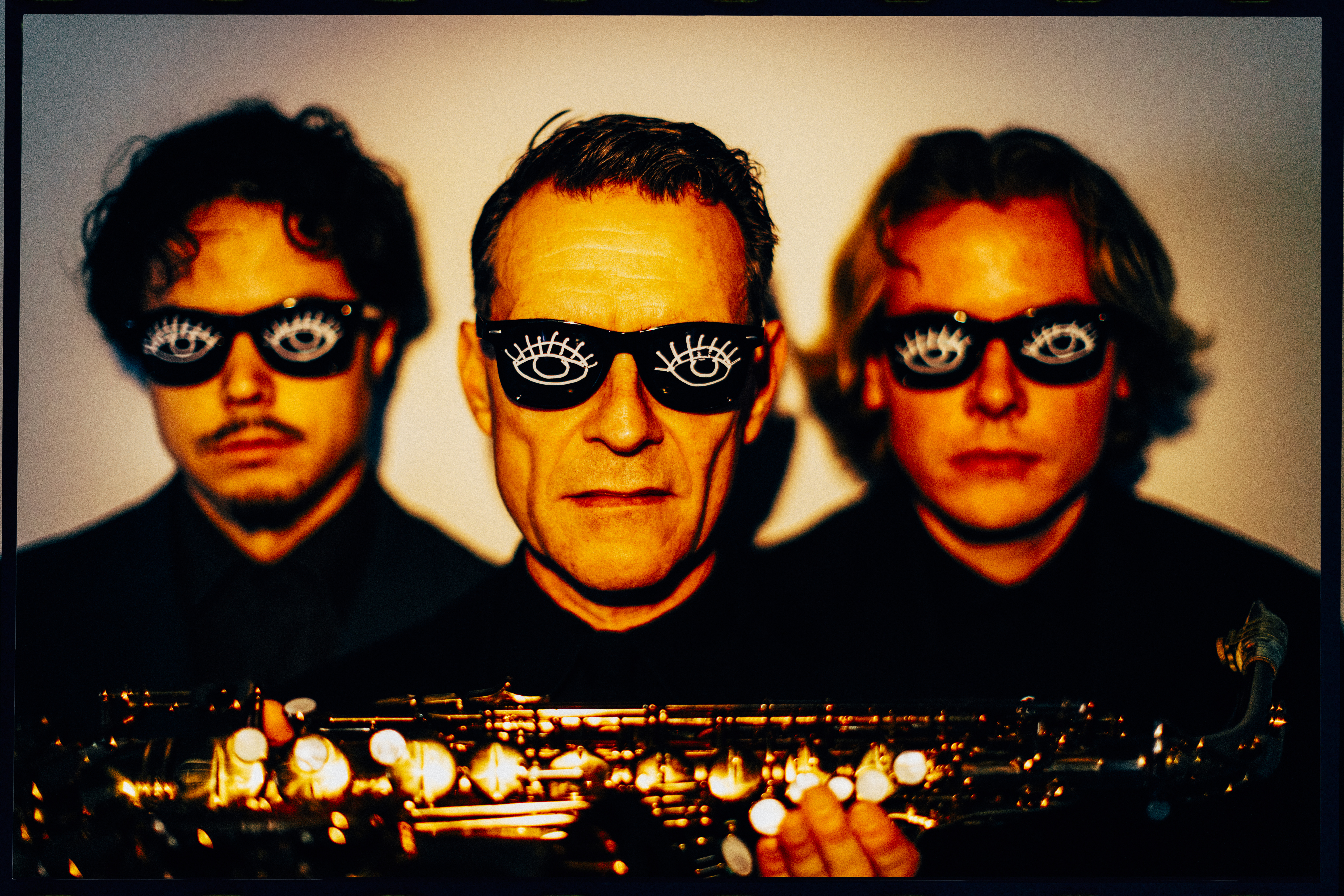
Joining Herman in the trio are Thomas Pol on bass and Jimmi Jo Hueting on drums.
One of the session’s standout pieces, ‘Kazegafuku’, features traditional woodwind players Akihito Obama (shakuhachi) and Ko Ishikawa (shō). ‘Kazegafuku’ (風が吹く) translates roughly to “the wind blows”, a phrase often used in Japanese music and literature. It aligns beautifully with the timbres of shakuhachi and shō.
Herman has always had a knack for cross‑cultural dialogue, and here he fully immerses himself in a sound world shaped by air: the shakuhachi’s sighs, the shō’s glowing clusters, the saxophone’s grain, even the rhythm section’s subtle propulsion.
Look out for the new album, which is out on 27th March, but for now, meditate on ‘Kazegafuku’ below.
Along with sharing the new track, we spoke with Herman about the upcoming album.
In recent years, you’ve visited Japan to study its music scene. What part of Tokyo’s underground scene left the deepest imprint on how you approached The Tokyo Sessions?
I’ve been going to Japan regularly for the past twenty-five years. There is so much amazing music, especially in Tokyo, it’s really difficult to name one particular scene. That‘s some of the things I love about the city, there are literally hundreds of clubs and every day there’s a ton of stuff to check. I would say, though, one of the most unique musical experiences one can have in Japan is loud music. Because of the earthquake-proof buildings, the walls in the clubs are so thick that volume is not an issue. There are basement clubs with PAs stacked up to the ceiling in all kinds of unexpected places. In shopping centres and residential areas, you can find venues that program incredibly loud hardcore, avant-garde and experimental pop music. Well, recommended to knock the jet lag out of your system. This is unthinkable in Holland; we don’t have basements because of all the water.
How did you connect with Thomas Pol and Jimmi Jo Hueting?
I met Thomas after he came back from his studies in New Orleans about eight years ago. We’ve been playing together ever since. Thomas lived there for two years, and you can hear that in his playing. Jimmi played drums on my no-wave influenced album ’Nostalgia Blitz’ that I made just after the pandemic. He, like me, loves all kinds of music and listens to loads of different stuff, not just jazz music. He is also a singer, composer, and a wizard with Ableton. I really enjoy playing with musicians who release their own material. Thomas and Jimmi have both got new solo records lined up for release at the moment. They’re used to doing their own thing and are always very supportive in the creative process. To be honest, even though I’ve written a couple of hundred songs, I’m often very ashamed of what I bring into rehearsals; it really helps to have people around to urge me on.
When did the electronics and samples enter the conversation — were they planned or spontaneous?
I have been experimenting with effects in the studio on many of my albums, but always during the mixing process after the actual recording. I hadn’t tried anything live yet because of the hassle. Two very practical things made me go electric. Firstly, there is a French guy who makes a tiny microphone (intramic) that you put inside the neck of the saxophone. This makes it possible to attach effects to the signal with no leakage. Secondly, last year, just before I turned fifty-seven, I finally managed to get my driving license, so now I can take more crap with me to the gig. It’s nice to twiddle some knobs for a change instead of running the changes on my alto all night.
How do you balance the physicality of acoustic jazz with the more machine‑driven pulse of the electronic elements?
I’m in this for fun, and it’s fun to mix things up. I’ve been doing that all my life. I realised when I was nineteen years old and halfway through music college that I could go in any direction I wanted. There are no borders in music. Apart from that, I’m also kind of a mongrel. Half British, half Dutch, I was raised bilingual, my father was a rabbi, my mum’s not into religion, and I’m half of a twin. I’m a real inbetweenie and proud of it. It feels natural to switch between acoustic and electronic, and works surprisingly well with the trio. We can play an acoustic set in a jazz club, we can play a big stage with electronics, and we can mix it all up, too.
Did Tokyo change the way you think about your saxophone as a storytelling instrument?
It’s very inspiring to hear all the different kinds of players in Tokyo. Check out young tenor saxophonist Tomaki Baba, he’s is a monster! I must say, though, the Japanese avant-garde scene from the 70s and 80s is really something else. There’s this amazing mix of fire and skill that’s very deep and unique. Maybe it has something to do with the way Japanese society is built up or the samurai genes in their DNA. I don’t know, that’s a good question for Baba san. But to answer your question about changing the way I think about storytelling, I’ve still got a lot to learn, just check out alto player Akira Sakata with the Yosuke Yamashita trio, then you’ll understand what I mean.
If The Tokyo Sessions were a city at night, what would its streets sound like?
I think they’d sound like a memorable night on the town, going from broad avenues with bright lights to downtown alleyways with basement clubs where a different sound of Tokyo is brewing. The idea was to make an album with influences from some of my favourite Japanese musical niches. There’s just so much amazing music to discover; the more you learn, the more you find to learn.
Do you have any final words for the Twistedsoul community?
Thanks for giving our record a spin. I’ve made over fifty albums in the past 30 years as a solo artist and as part of my band New Cool Collective. Not all of them are great, but they’ve been getting better over the years. I’m just always so happy when people check out my stuff. We’re all slaves to the algorithm, scrolling on our phones, being fed the same kind of stuff all day. In spite of technology, it still takes a bit of effort to find something new. So thanks for taking the time to read this piece and maybe giving my music a listen.
