

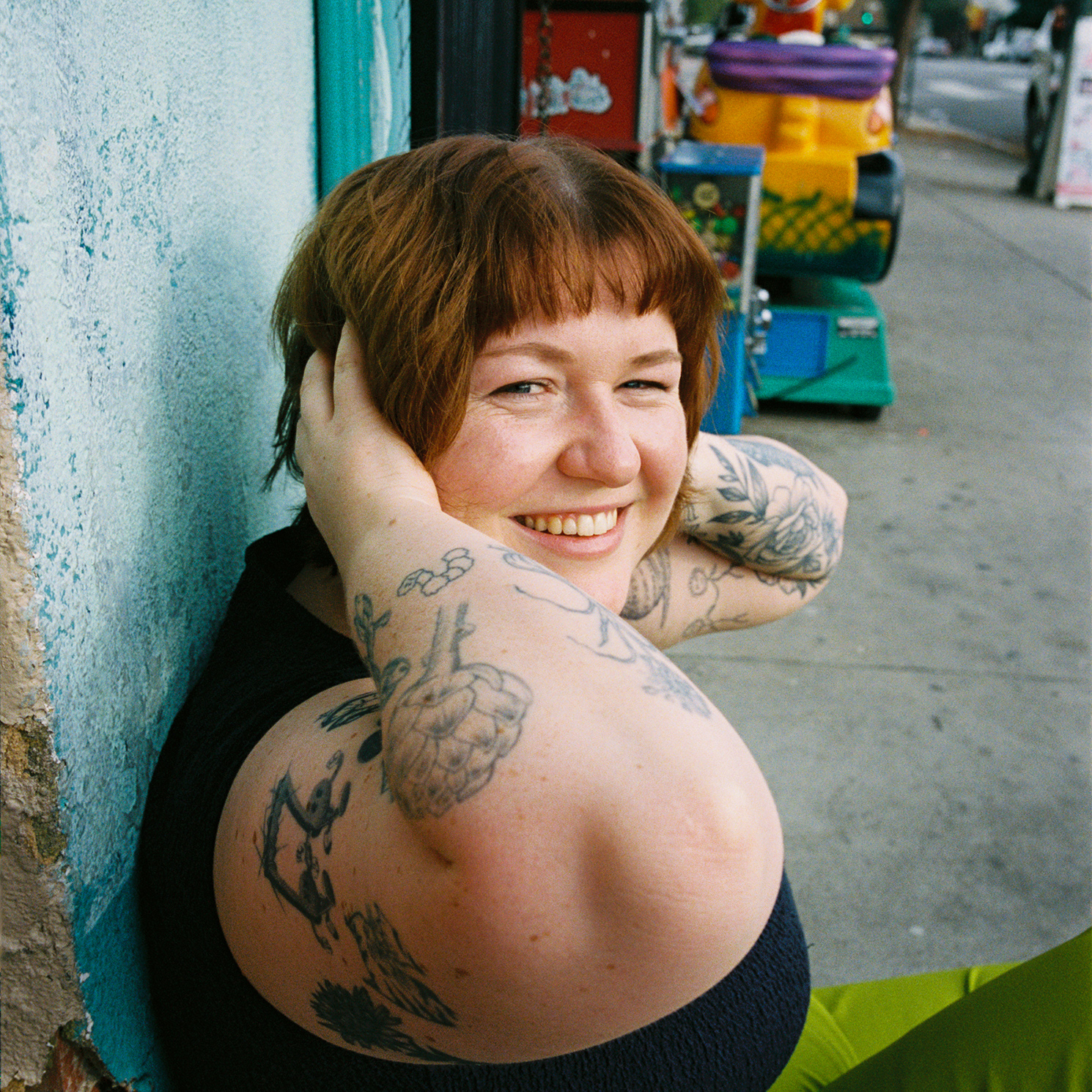
Ahead of the release of Color Theory next month, Nicole McCabe shares Hues. This piece captures the album’s emotional centre with quiet confidence. It opens unhurried, almost breathing itself into existence. A looping bassline settles in first, warm and grounded. At the same time, soft textures hover overhead, creating a late-night, half-lit atmosphere.
McCabe’s alto sax enters with restraint rather than flourish. Her phrasing is melodic but searching, circling ideas instead of spelling them out. There’s a subtle tension in how the groove holds steady while the harmony slowly shifts underneath. Midway through, the arrangement gently expands. Strings swell, not dramatically, but enough to introduce a soft ache, before everything pares back again to piano and space.
What makes Hues compelling is its intimacy. Nothing feels overstated. The rhythm section stays close, dry, and present, while McCabe lets silence work alongside sound. It reflects her growing interest in free improvisation without abandoning structure. As a preview of Color Theory, Hues feels less like a statement and more like an invitation to lean in and listen closely.
Recorded live at Brooklyn’s renowned Bunker Studios, the forthcoming album is brought to life by Kanoa Mendenhall (bass), Eliza Salem (drums), Yvonne Rogers (piano) and Nicole herself as well as numerous special guests and produced by the great Jason Moran.
Ahead of the album we chatted to Nicole about the upcoming project. Dive in below!
Hues is a composition that contains rhythmic puzzle pieces that fit together in eachothers spaces. This composition deals with odd meters and syncopated bass lines but the rhythm sections manages to make it feel effortless and light. Nicole McCabe
Going into the new album, did you have a sense of what you were looking to do stylistically? What ideas or questions were you exploring in Colour Theory?
I was definitely looking to continue to expand on ideas and concepts from previous albums with a bit more parameters. I think I dove in a lot more to fully compose more aspects of the written sections, this is the first record of mine where I wrote some of the piano chords and ideas. On the other end of the spectrum, I tried to make some of the solo sections much more open in terms of tempo, chords, and possibilities. Leaning further into the known and the unknown were the ideas I was trying to explore.
What role does improvisation play in shaping your compositions before they’re recorded? Also, how do you navigate between honouring tradition and pushing boundaries?
The melody is the most important thing I am thinking about when writing, so everything else should be in support of the melody. Most of the solo sections on this album were either free improvised sections or short progressions to solo over, so whatever happens in this section should be in support of the story that we have started to tell with each melody. I really believe the tradition is still in everything that I do because I care so deeply about what music has come before me and when starting to find my voice my influences(Cannonball Adderley, Charlie Parker, Joe Henderson, John Coltrane) were the ones that helped me find it. Most everyone from our tradition was an innovator themselves, so I think we learn from them that it’s important to try new things and try to interpret concepts in your own way.
Did working with Pete Min and Colorfield on your last album have any impact on how Color Theory turned out?
Working with Pete Min on my Colofrield record taught me a lot about a different approach to songwriting which I think carried over into Color Theory and blended into my approach. With Pete everything we wrote was very deconstructed and I was never sure how the final product would sound, putting a lot more of the trust in myself rather than an ensemble. I think it gave me a lot of confidence to give more input with the rhythm section and trust my instincts a bit more.
Could you talk a bit about working with Jason Moran and what he brought to the project?
Jason is one of the most incredible people I’ve ever met. We met when I was a student in the Betty Carter Jazz Ahead program in 2022. He offered so many insightful ideas and sentiments while working in the studio that made me look at my own music in a different way. He also deeply cared about us playing the music with tenacity and bravery, which brought out something in all of us at the studio.
What was your experience of being mentored by Caroline Davis at the Next Jazz Legacy program?
Caroline helped me a lot with the compositional and organisational process leading up to recording this album. She inspired me a lot with some of the more rhythmic/polyrhythmic style of writing that made its way into some of these compositions. She is so warm, kind, and supportive, and I am so grateful that we have connected through NJL and stayed in touch.
Speaking of Next Jazz Legacy. Could you talk about the other musicians you worked with on the album? I believe youall meet at the program.How do you create space for your collaborators personalities to come through in your compositions?
When I first played with Kanoa, Yvonne, and Eliza through the NJL program, I knew I wanted them to be on my next album. They are so creative, honest, and serve the music in such an intentional way. I also met Christie Dashiell through this program who is featured on ‘Sifting, Shifting’. Her voice is incredible, and I am so happy for all her recent successes!
What conversations do you hope your album will spark within the jazz community?
I hope that people can hear continuous growth from me in my compositions and playing, as well as hearing the love and care that we all put into this album. I just hope it resonates with some people as an authentic body of work.
Do you have any final words for the Twistedsoul community?
I am so grateful to share these thoughts with all of you, and thank you so much for taking the time to learn about myself and this record. Thank you for the support!!
