
Our ‘Track By Track’ guide sheds light on the stories behind some of our favourite artists’ music.
We love pulling back the curtain on the stories and inspirations behind intriguing new releases. It’s always fascinating to hear the personal anecdotes, creative processes, and little-known tales that shaped each track, giving us all a deeper appreciation for the artistry that goes into crafting these musical gems.
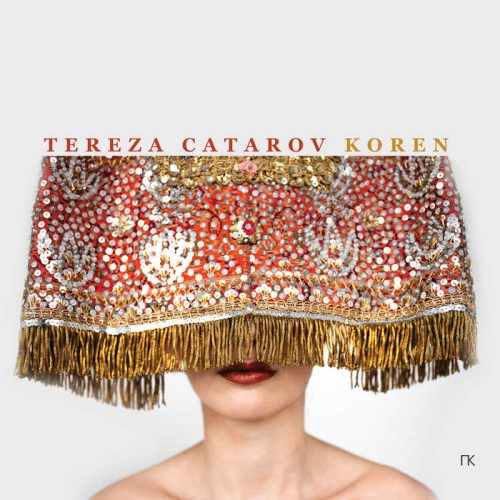
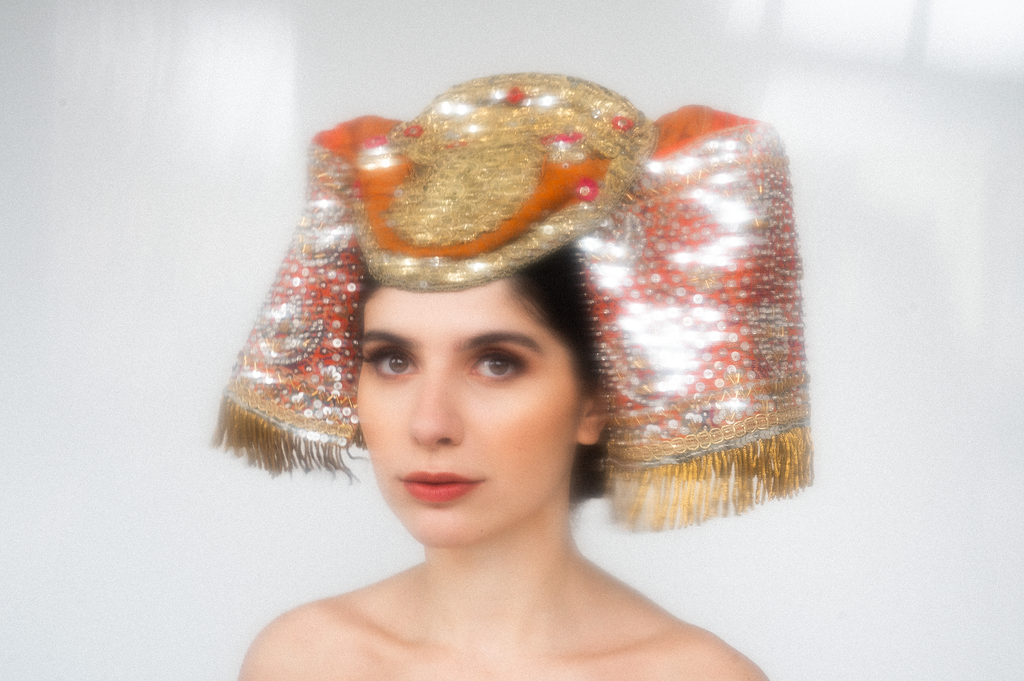
Today, we’re showcasing the debut album by London-based singer and composer Tereza Catarov. Featuring a band of celebrated jazz musicians, Koren intertwines Romanian and Bulgarian heritage with contemporary jazz, honouring the stories and struggles of women across generations.
If you’re in London, you can catch Catarov at her album release show on Saturday, 5th July – Tickets here.
Without further ado, we’ll let Catarov introduce the album, followed by the Spotify stream and her in-depth track-by-track guide.

My debut album, Koren (out today), is a deeply personal and culturally rich project that weaves together jazz, Balkan, and Eastern European folk traditions. Inspired by the life stories of women from my childhood community, the album preserves and reimagines the voices of past generations, bringing their experiences into a contemporary musical landscape.
The idea for the album began after a few video calls with my grandmother. I have always known she is an incredible folk singer—a living treasure who carries hundreds of traditional songs in her memory. During one of these calls, she showed me a notebook she had found, left behind by her late mother. Inside were lyrics to some of her favourite songs.
I asked her to sing a few of them to me, and as she did, I recorded her on my phone. From the very beginning, I was deeply intrigued by the stories within these songs. They weren’t the usual love songs or wedding melodies I grew up hearing. Instead, they spoke of the hardships women in our community faced—how they endured, how they overcame, and, sometimes, how they didn’t.
These were stories I already knew—passed down through my family and our community—but hearing them in song had a much deeper impact on me. It made me reflect on how these experiences continue to shape women today, how trans-generational trauma lingers within us, sometimes consciously, sometimes unconsciously. I truly believe that we would not be who we are without the struggles and resilience of the women who came before us.
This realisation inspired me to write this album, called Koren, which in my Bulgarian dialect means “root”. I asked my grandmother to sing me more songs around this theme, including some she had written herself. From there, I began composing my own pieces, weaving together these narratives with my own musical language.
Many of the songs on Koren are sung in the endangered Bulgarian dialect, Palkenski, a rare linguistic treasure passed down through generations of the Bulgarians from Banat – Romania. The music captures the resilience, struggles, and wisdom of the women who shaped my upbringing, transforming their stories into a sonic tapestry that merges tradition with innovation. Through layered vocal harmonies, intricate jazz harmonies, and folk-inspired rhythms, Koren honours my grandmothers’ songs while expanding their legacy into a modern transcultural dialogue.
Recorded in late 2023, the album features an extraordinary lineup of musicians: Ioana Șelaru(violin/viola), Christos Stylianides(Trumpet and fx), Alex Simu (clarinet), Yiorgos Bereris (piano), Cem Evin (guitar), Thodoris Ziarkas (double bass), and Billy Pod (drums), Alex Bonney (mixing and mastering), each bringing their distinctive artistry and deep connection to Balkan and jazz traditions.
1. Nevesta – Woman that gets married into a family (daughter-in-law, sister in law, wife)
Original – Palkensiki (Bulgarian dialect)
Come nevesta to the field
We need to go to work
You crazy nevesta
Why don’t you want to come to work?
I am not gonna do this
I am tired of all this work
I am going to stay home
This life is not for me
Let me walk you to the door, you can go
I will open the gates for you
You crazy nevesta
Why don’t you want to come to work?
I am going to stay home, cook a nice chicken
And I am gonna eat it for lunch
You crazy nevesta
Why don’t you want to come to work?
For you I am going to cook just beans
With a bit of lard
I am going to stay home
This life is not for me
Lyrics: Terezia Catarov /Music: Tereza Catarov
Nevesta – Contextualisation
Nevesta was the name given to a woman when she married into a family. It was common for her to be treated as a second-class citizen, forced to work, left to eat last, and generally powerless. This song portrays a nevesta rebelling against these impositions on her life.
This song speaks about the culture surrounding my grandmother’s life when she got married. At the time, when a woman married, she was expected to move into the house of her in-laws, and share a house with her new husband, but also his parents, grandparents and siblings. This wasn’t always the most welcoming environment, and there were social norms on how she could expect to be treated, how she was expected to work in the house and in the fields. She wouldn’t even be called by her name, she was called Nevesta, which is the title of this song, where my grandma talks of defying these social norms and going against their expectation, but also of her awareness of how vulnerable she was in her resistance to this expected submission.
On this first tune, you can hear me singing, joined by Christos Stylianides on trumpet and FX, Yiorgos Bereris on piano, Thodoris Ziarkas on double bass, and Billy Pod on drums. I’ll say this for every song: I’m constantly amazed by my bandmates — not only by how beautifully they played on each track, but by how deeply they understood my sometimes intricate compositions and arrangements, bringing their own unique artistry to the music.
2. Babi’s intro (Granma’s intro) – Original – Palkensiki (Bulgarian dialect)
On a Thursday, you invited us to the wedding
We all gathered
To eat and to drink
And to send Rafaela away to marry
Oh sweet mum, oh dear mum,
Why are you so sad?
Why are you so sad?
Because I was your only child
2. Babi’s intro (Granma’s intro) – Contextualisation
This piece features a raw recording of my grandmother singing, accompanied by Christos’s trumpet and FX. Many people assume there are synths behind her voice, but in fact, it’s just Christos running his trumpet through a range of effects — no synths involved.
3. Racka (Rafaela) – Original – Palkensiki (Bulgarian dialect)
On a Sunday, you invited us to the wedding
We all gathered
To eat and to drink
And to send Rafaela away to marry
Her parents are very sad
Because she is their only child
And now it’s time to send her away
To give her to her husband, Boni
Oh sweet mum, oh dear mum,
Why are you so sad?
Why are you so sad?
Because she was their only child
Lyrics: Terezia Catarov /Music: Tereza Catarov
Racka – Contextualisation
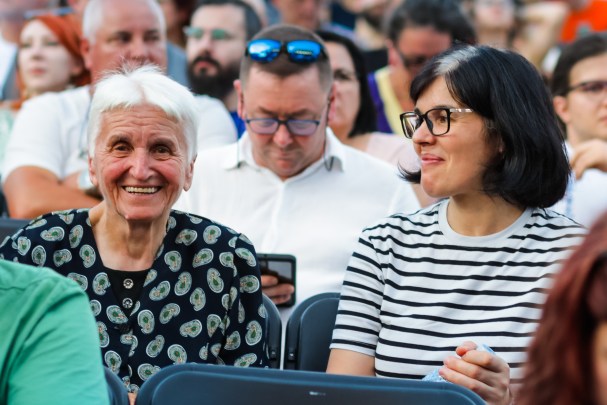
This song is a continuation, an arrangement of my grandmother’s song. This is a song originally composed by my grandmother for my father, who was just beginning his musical journey at the age of 12, playing at a wedding. The bride’s name was Racka. My grandmother comes from a traditional world. She has a gift for looking around and reading people’s life stories on their faces. For her, every person has a song — one that soothes their pain.
She composed this song back then, and a while ago, during a video call, she sang it to me. Racka’s story deeply moved me. The lyrics speak of that moment in a wedding when the bride leaves her parents’ home to join the groom’s family. This ceremony carried an atmosphere almost like a funeral. The bride and her parents wept in farewell as she left behind her home, family, neighbours, and friends to become a wife in someone else’s household.
The lyrics made me reflect on how women today still find pieces of themselves in stories like this — and how transgenerational trauma lingers in our collective memory.
Musically, my arrangement of this song is in 11/8 — a time signature associated with Gankino horo, a traditional dance from northern Bulgaria. What makes this piece especially compelling is the presence of two contrasting claves (rhythmic groupings) introduced right at the beginning. The drums divide the 11 beats into 2–2–3–2–2, while the guitar and bass follow a slightly different pattern: 2–2–2–2–3–2.This interplay happened by accident. While writing the bass and guitar lines in Sibelius, I forgot to adjust the metronome to match the intended division. But when I played it back, I was struck by the way the two rhythms danced around each other. That rhythmic tension unexpectedly captured the emotional essence of the piece: the fear of stepping into the unknown, and the curiosity that propels you forward despite it. Floating above this rhythmic structure, the voice, piano, and trumpet are untethered — they drift, lean in, hesitate, explore. It’s as if they’re searching for each other in an unfamiliar space, cautiously reaching out, wondering what will come next. The music doesn’t resolve easily — and that’s the point. It lives in the in-between.
4. Du-te dor (Longing, go away) Original -Romanian
Go away, my longing, go and take all the other pains with you
Go my longing, go and take all the other pains with you
Go over the hills
Go over the hills
Go to my man
Go to my man
Because he is far away and I am in pain
Because he is far away and I am in pain
Go, go, go
Go and grow wings “my love”
Go there, where stars are dying
Go away, my longing, go and take all the other pains with you
Go my longing, go and take all the other pains with you
Go over the hills
Go over the hills
Go to my man
Go to my man
Because he is far away and I am in pain
Because he is far away and I am in pain
If he is going to ask you how my life has been
If he is going to ask you how my life has been
Tell him I got married
But I didn’t forget our “love/pain/passion/longing”
Traditional Romanian music, documented by Constantin Brailoiu/ Arranger: Tereza Catarov
Du-te Dor – Contextualisation
This song speaks about a woman longing for her lover, begging this feeling will go away. The Romanian word “dor” is one of those words that can never be translated accurately. The Romanian philosopher Constantin Noica said: “«Dor» has something prototypical in its nature: it is an unstructured construction, an indivisible whole, as many other Romanian words which have a deep and specific meaning. «Dor» is a fusion, not a compounding. The Latin word «dolor», i.e. «pain», where it originates from, fused with pleasure, grown out of pain, one can’t really understand how”.
Musically, this piece was inspired by a traditional Romanian folk song documented by ethnomusicologist Constantin Brăiloiu. It began as a composition assignment during my Master’s studies, but quickly evolved into something much more personal. ”Du-te dor” opens as a melancholic meditation, with space for stillness and reflection, before unfolding into a vibrant, jazz-inflected journey — rich in texture, nuance, and emotional depth. The rhythmic flow shifts from 5/8 to 7/8, mirroring the emotional arc of the piece and making space for each musician to bring their voice to the story.
Billy Pod delivers a fantastic, expressive drum solo that seems to stretch time itself, followed by an electrifying improvisation from Cem Evin, full of color and urgency. Alex Simu’s clarinet lines are simply breathtaking — melodious, evocative, and deeply human. They tie the old and new together with such grace, it’s hard to tell where tradition ends and invention begins.
5. Hadvata (The Hadvate family) – Original – Palkensiki (Bulgarian dialect)
At the cabin, the parents agreed to the wedding
But at the jewellery they broke it off
They argued over the golden thread of the dress
And their mothers broke off the engagement
Mrs Slava doesn’t want me,
But Boni, my fiancé, would die for me
C’mon Slava, accept me
Come back and talk to my family
Even if Slava doesn’t want it
Boni will still marry Reda
C’mon Slava, accept your future daughter-in-law
Come back and talk to her family
Boni plays and Reda dances
And only his brother knows that they are still together
C’mon Slava, accept your future daughter-in-law
Come back and talk to her family
(speaking sample)- C’mon sing that song for her grandma to hear it:
C’mon Slava, accept your future daughter-in-law
Come back and talk to her family –
Lyrics: Toni Hadvata /Music: Tereza Catarov
Hadvata – Contextualisation
In our Bulgarian community in Romania, every family has a specific nickname and a specific song, based on true stories that happened in that family. Hadvate is the nickname of my family in this community. This song speaks about a particular custom of Palkienski weddings in the past. Wedding dresses were always decorated with golden thread embroidery, and the number of lines decorating the side of the dress identified the social class of the bride. In this story, the bride and groom were in love and were lucky enough that their parents accepted it. That was, until there was a fight between the parents of the bride and the groom over the golden thread embroidery. The story had a happy ending, though, the bride and groom overcame their families’ differences and still got married. On this song, you can hear Yiorgos playing piano and capturing the entire essence of the song, and an amazingly beautiful solo. Thodoris Ziarkas’s bass leads the dance, taking a wonderful solo over a skipping, percussive backbeat. Somewhat movingly, Hadvate features a vocal contribution from my father, Teo Catarov, a well-known accordion player and singer in Romania, stressing the intergenerational theme of the album’s deep folk roots. Also, at the end of the song, you can hear a sample from a family recording, my father singing this song to me while I was very little and me, as a baby, trying to join him.
6.Zelin (Green) – Original – Palkensiki (Bulgarian dialect)
Green leaves and peonies
A boy fell in love with a girl
The two of them wanted to get married
But their parents would not allow them
The two of them promised
To drown themselves
If they would not be allowed to marry
The parents kept looking for them
And after three days, they were found
They kept their promises
They said that they would do it, and they did
They took them to get buried
The boy was on one side of the road
The girl was on the other side of the road
On the boy’s grave,
A little plant started to grow
And it turned out to be, an apple tree
On the girl’s grave, grape vines started to grow
The vines grew the other side of the road
And hugged the apple tree
People keep going to their grave
And always remembered
That their parents did not allow them to be together
But God did
Lyrics: Terezia Catarov/ Music: Tereza Catarov
Zelin – Contextualisation
This song tells a Romeo-and-Juliet-like story, where two young lovers were forbidden to be together by their families. Unable to bear the separation, they took their own lives. As in many traditional folk tales, the mystical appears: trees planted on their graves grew and eventually embraced each other—a symbol that their love endured beyond death, for eternity.
Musically, the piece is set in 15/8, inspired by the Bulgarian dance Bučimiš, with the rhythmic division: 2-2-2-2-3-2-2. You can hear Alex Simu “crying” through his clarinet, alongside Cem Evin on guitar, Yiorgos Bereris on piano, Thodoris Ziarkas on bass, and Billy Pod on drums. What makes Zelén stand out is the interplay between written instrumental and vocal melodies, designed to evoke the image of the plants growing from the lovers’ graves. The emotional peak of the song is the soli section, where voice, clarinet, piano, and guitar unite in a unison line while bass and drums anchor the complex 15/8 rhythm. This part, co-written with Cem, is always a thrilling challenge to perform live—and an audience favorite.
7.Mai Puiuț de Randune (Oh, little swallow bird) Original -Romanian
Oh, little swallow bird
Oh, little swallow bird
Did you see my mum?
Did you see my mum?
I saw her behind the camp
She was kneading white bread
White bread she was kneading
And bitter tears she was crying
Tell her to stop kneading bread
To stop singing
To stop singing
Because she married me away from her, and I am not well
Music and Lyrics: Suzana Popescu/ Arranger: Tereza Catarov
Mai, puiuț de rândune’ – Contextualizition
This is a Doina, a type of archaic song generated by deep, inconsolable pain. In this case, the pain was caused by the irrevocable separation of a daughter from her mother. Originally, Doina was a song performed in solitude by an ailing singer. Strangely, by performing it, the singer healed or, at least, eased her pain.
Probably my favourite part of this piece is the Greek lyra playing, by Thodoris Ziarkas, I think it captures the pain and essence of the song.
8.Duslo-j vreme (The time has come) Original – Palkensiki (Bulgarian dialect)
The time has come for me to get married
I am asking my dad, who shall I take as my husband
He tells me that there are three handsome boys
Out of the three, two of them are rich
The third one is poor, but he is kind
I like him the most because he is thoughtful
Dad, you are older, tell me what to do
Who shall I marry out of these three boys?
My dear girl, if you need land and sheep
You can buy as much as you want with money
They were trying to marry us based on the social status. A rich boy would not take me, he would take a rich girl. But if he was despicable and ugly, but rich, he would take a girl that is beautiful and poor. But she wouldn’t want him! Like me, right?! My father wanted to marry me to the rich boy, without knowing him, because he thought I will have a wealthy life there. To be a bride at 14! I went through all this, what else can I tell you?!
The time has come for me to get married
I am asking my dad, who shall I take as my husband
Dad, you are older, tell me what to do
-She wouldn’t want him, she is not thinkinking of wealth.
Who shall I marry out of these three boys?
-To be a bride at 14!
A good boy is hard to find
Kindness and love is not something you can buy at the market
– I went through all this, what else can I tell you?!
Lyrics: Terezia Catarov/ Music: Tereza Catarov
Duslo-j vreme – Contextualizition
This song speaks of how it was usual for families to marry their daughters at a very young age, as young as 14. My grandma, whose testimony you can hear through the song, was one of those very young brides. Marriages were mostly arranged based within the same social class. However, when the bride was beautiful, it attracted rich suitors. Her will was not usually taken into consideration.
This is probably my favourite song on the album. Including my grandmother’s testimony was deeply meaningful to me. Musically, the piece is set in 7/8—one of my favourite time signatures—and features a stunning piano solo by Yiorgos Bereris. After his solo, there’s a brief moment where the bass and drums bring back the 7/8 groove, while the piano and guitar are in 5/8. Over all of this, you hear a ticking clock sample in a 3-beat cycle, subtly reinforcing the title of the song: which in English means -“The Time Has Come.”
9. Am să Rămân (I’m going to stay) Original -Romanian
And if you ask me, I’ll stay
And if you want to tell me
I will listen
Take me home
The fear that is telling me to runaway
Doesn’t matter anymore
And if you want to see it, stay
Start by listening to my silence
My moon is rising inside of me
Only if the night sky is clear
And if you want, and if you tell me
I’m not gonna run
I am gonna stay
And if you want, and if you tell me
I’m not gonna run
I am gonna stay
I am gonna stay, I promise that I am gonna stay
Lyrics: Tereza Catarov/ Music: Tereza Catarov
Am să Rămân – Contextualizition
This song closes the album. All the previous tracks speak of the hardships faced by women in the generations before me. I often reflect on the transgenerational trauma passed down to us—the women of today—and how it continues to shape the way we experience love, fear, and the world itself. I composed this final piece with that in mind: the challenge of breaking free from inherited fears and learning to embrace love fully.
For this track, we were fortunate to feature the incredible film composer and violin/viola player Ioana Șelaru, who wrote a breathtaking string arrangement, and the phenomenal Yiorgos Bereris on piano. When I first started writing this piece, it actually began as a reharmonisation of the jazz standard “But Not for Me”. I love taking standards and reimagining them, building my own melodies on top.
One more thing you might have noticed throughout the album—I have a deep love for vocal harmonies. On this final track, I really went all in, harmonising my entire solo and creating a floaty, layered vocal conversation. It’s a tribute to the women who came before us, and to the voices—both literal and symbolic—that still echo within and guide the women of today.
