
Our ‘Track By Track’ guide sheds light on the stories behind some of our favourite artists’ music.
We love pulling back the curtain on the stories and inspirations behind intriguing new releases. It’s always fascinating to hear the personal anecdotes, creative processes, and little-known tales that shaped each track, giving us all a deeper appreciation for the artistry that goes into crafting these musical gems.
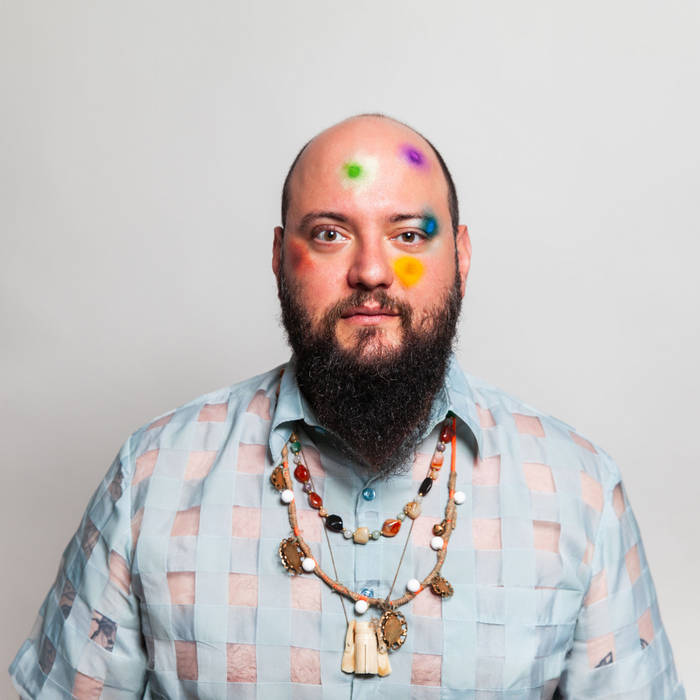
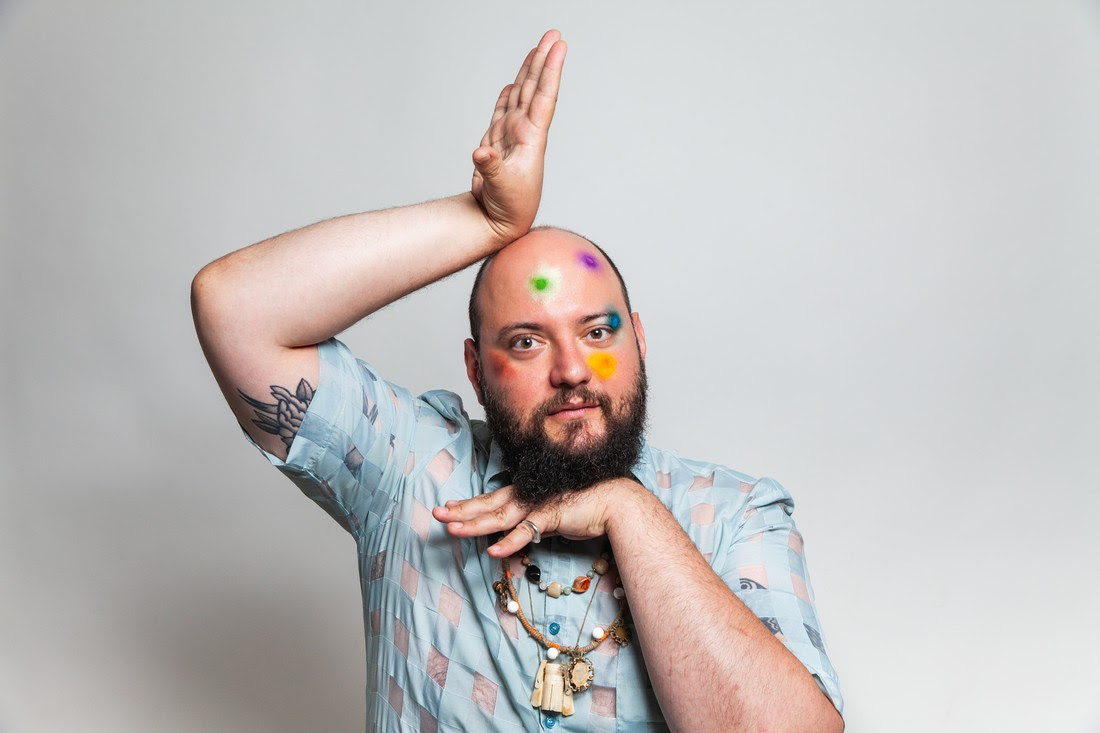
Chad Kouri‘s Mixed is a meditative debut built from layered moments, where sound becomes an extension of presence, memory, and improvisation. Across its nine tracks, Kouri invites listeners into a world shaped by deep listening, where small instruments, field recordings, and saxophone melodies breathe with intention. Some pieces unfold with the quiet hum of synths and textures recorded in still, domestic spaces. In contrast, others pulse with the casual energy of communal improvisation, captured on handheld devices or in public settings.
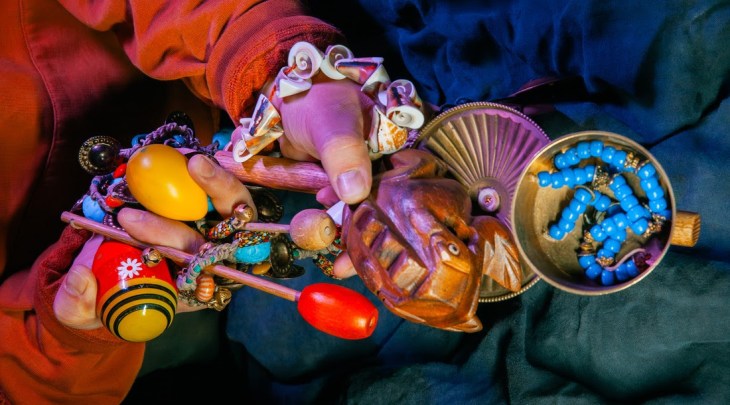
There’s an organic looseness to this music. The seams are visible, and that’s the point. Each piece carries traces of time, place, and collaborators: the chime of a handmade instrument, the rattle of a necklace, and the warmth of room tone. Recorded across years and cities, from New Mexico lodges to Detroit art spaces, the album reveals its depth through repetition, like prayer or mantra.
Rather than polish or precision, Mixed offers resonance and vulnerability. Kouri’s music feels lived-in, intentional, and generous. A sonic collage that reflects a mixed identity, practice, and spirit with quiet, radiant clarity.
Mixed is out now (buy here). Stream the album below, followed by Chad’s introduction and exclusive track-by-track guide.
All tracks on Mixed recorded live between 2022 and 2024 utilizing my typical gear setup of the time, including tenor saxophone, little instruments, Korg Monologue, Boss RC-50 Loop Station, and FX, except for tracks “Torus” and “Little Instruments,” which only include acoustic instruments in the room without the use of FX or live sampling/looping. All tracks included on this record are live improvisations, composed spontaneously, except for “Sound Sketch,” which was composed in 2022.
Track one, “How Who Hum Chant,” was created in preparation for my first month-long winter residency in New Mexico in early 2022. The best way for me to ensure that I had everything I needed to record while living remotely in the Brazos Cliffs was to take an overnight trip to the sunset side of Lake Michigan. My frequent collaborator and studio mate, Andy Hall, has a family home there that he has generously offered to me over the years. After arriving, I assembled my gear and plugged into my Zoom 6H as an audio interface, which was the first time I would utilize my live setup plugged directly into a DAW. I then recorded this first track in one take, utilizing my modest collection of FX pedals and the robust Boss RC-50 loop station. This is one of the few tracks on the record that involved some post-production—specifically finessing the various vocal loop durations and trimming some time to fit the vinyl format. I captured this recording a couple of years into the COVID-19 pandemic while Andy and I were sharing a fine art studio and music rehearsal space and didn’t see any other folks aside from our families for long periods of time. Conversations often arose around the importance of using our voices in resistance to oppressive systems and speaking truth to power. Including it in my music serves as a good reminder of that, but at the time, my voice was not something I was using when recording or performing. Before this, most of my singing was done at a young age with my father in various community barbershop groups and, later on, as an adult, in the car while listening to Motown and R&B on the radio.
Track two, “KHFHH,” was created during a jam session in early 2023 with Rod Hunting, Alex Fuller, Andy Hall, and John Hall. Hunting, Fuller, and I were part of various non-performing ensembles starting as early as 2010 and running through about 2016. The Halls were newer collaborators of mine at the time. This track was recorded during the very first jam session that all five of us came together, spurred by the open jam that Andy Hall hosted monthly between 2016 and 2024 at our shared fine art studio and music rehearsal space. I’ve never been in the habit of recording with anything other than my cellphone for open jams and study sessions, typically only for self-reflection and study. This track felt necessary to include because it was captured during the very early days of my studies with Vincent Davis, and a lot of vulnerability is present here. More so than I’m typically comfortable sharing. The joy captured in this recording—the voices in the background laughing and encouraging each other—feels genuine and powerful. A great example of the excitement and camaraderie that I often experience during musical commune.
Track three, “Torus,” was recorded at Experimental Sound Studio in the Ravenswood neighborhood of Chicago on the occasion of Doug Fogelson’s Torus Sessions. The sessions consisted of a series of hour-long blocks, during which various duos or individuals played a complete set of his Torus instrument—designed and commissioned by Fogelson himself—as well as their primary instruments. If you are trying to imagine the Torus in your mind’s eye, imagine pipe-like tubular brass at various diameters and lengths bent into perfect circles, almost like hollow gongs. They range in size from several inches across to nearly three feet in diameter. I was asked to play the Torus system, followed by some overdubbing on my saxophone. Fun coincidence: I noticed recently that the opening horn line is similar to Pharaoh Sanders’ first full-lunged proclamation on Promises—the last record he contributed to before his death. Aside: If you’re not familiar with Experimental Sound Studio, look up their publicly accessible Creative Audio Archive—dedicated to the historical preservation of non-mainstream audio—featuring recordings from the private collections of Sun Ra, Fred Anderson, and many other artists from Chicago and beyond.
Track four, “Drift,” is from a session in February 2024, a few years into my annual New Mexico winter residency ritual. It was made alongside Tom Melk on his Korg Modwave. Whenever our time overlapped while visiting the Brazos Cliffs, we got into the habit of gathering after dinner and creating “drifts”—20-minute movements of intuitive sound. To me, drifts not only feel like an invitation to explore and stretch out sonically but also literally refer to the multiple feet of snow that often surrounded us during my month-long visits. This track is a clip from one of these drifts. The only edit made was trimming the front end. Everything was recorded live in the room on the memory card of my ZOOM H6 and mixed and mastered later. The ending features a carved bone rattle gifted to me by a dear friend, which is likely of southwest Indigenous American origin—possibly even from a vendor in the Santa Fe Plaza—but we are collectively unclear of its exact origin.
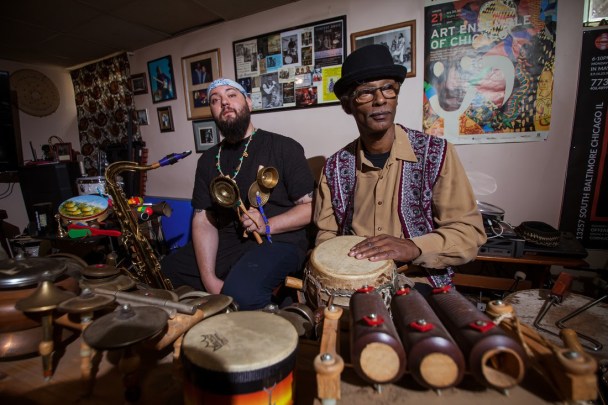
Track five, “Little Instruments,” is a small excerpt from a recording of my debut performance with Vincent Davis in May 2023. The duo performance was a part of my joint exhibition with Julia Arredondo, Temple Of, at Roots and Culture in Chicago. The performance was a culmination of the first eight months of study with Vincent. At the time, we met twice a week: once at an open jam on Monday nights, run by Preyas Roy at Katalyst Lounge, and once for private study sessions at Vincent’s home in “The Basement.” On vinyl, this track is split across both sides of the record, creating a continuum between side A and side B. The portion of the performance included here features all little instruments—small, often handmade or modified hand percussion or toy instruments. This approach was “popularized” by Roscoe Mitchell, the Art Ensemble of Chicago, and other founding members of the Association for the Advancement of Creative Musicians (AACM) starting as early as the 1960s. Little instruments used as sonic embellishments are a common strategy among Chicago’s South and West Side musicians who study with past and current members of the AACM. This excerpt features Vincent on his Vinnyophone, a homemade instrument that has been developed and refined over the years alongside Roscoe Mitchell. The complete duo performance will be released in 2026, likely titled Segways or Port Holes or something along those lines.
Vincent is known not only for his captivating and boundless drumming approach but also for his mentorship of many Chicago-based musicians over the past two decades. The community is tight. We play on each other’s gigs and book shows, run open jams in various arrangements, and often cross over in the basement for impromptu study and conversation.
Track six is “Sound Sketch.” It was recorded at the studio of Griffin Rodriguez and Silvia Bolognesi in the summer of 2022 in the Italian countryside near Siena. At the time, Silvia was teaching at the Sienna Jazz school. She invited me to perform for some of the students, followed by an open jam where Silvia drew names out of a hat to form various small ensembles for short six-to-eight-minute improvisations. “Sound Sketch” is from this performance. It is the most “produced” song on the record. This live-mixed stereo recording, captured by Griffin, was spliced and chopped in several different ways, resulting in a more conventional song structure than any other tracks on this record. The central theme was established during one of my Sound Sketch Instagram live streams, which I started broadcasting early in the COVID-19 pandemic. A recording of the open jam that followed this performance is included as the third track of my Italiano Improvisations project, released in late 2024.
Track seven is “A Dance For Grounding,” recorded live at Good Weather Gallery in Chicago. Ron Ewert asked me to share some sounds alongside other programming that activated the gallery space during the run of eA2Mc0rE2gW3—a group show that included work from Ei Arakawa-Nash, Mike Cloud, and Ewert. I remember having some technical issues that day, but they didn’t show in the recording. I’m getting better at rolling with surprises or missteps that arise within my gear or approach when making spontaneous compositions. Vincent often says that no matter how much we prepare, when the day arrives, we only have what we show up with at the gig, and sometimes that is less than ideal. Perhaps we forgot a piece of equipment, or we didn’t eat right, or our instrument is being particularly finicky. We must know how to approach, sustain, and recover from any and all scenarios. This tune, in a small way, is a celebration in the face of conflict or distress. Good practice for grounding techniques and mind maintenance strategies that can be used when more significant issues and conflicts arise in our inner and outer worlds.
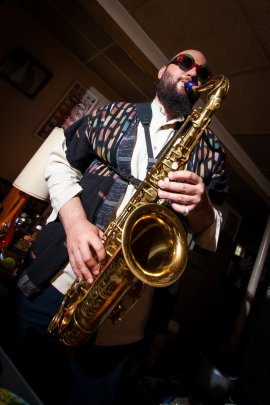
Track eight is “Rhythm Meditation,” performed and recorded live at Living Water in the University Village area of Chicago adjacent to the campus of the University of Illinois. Many students frequent this tea house, making for a lively room. My approach was to be a bit more introspective in my offering at this gig. Not creating sounds that demanded attention but more a bubbling atmosphere for folks to commune around, allowing for a more patient and passive evolution of sound. This track is a three-minute excerpt from the first set, which ran for about one hour. The set was an example of one of my preferred scenarios for performing: in a room full of life, conversation, phone alerts, and various other sounds, collaborating with the energy of the room rather than dictating over top of it. Rod Hunting joined me on the second set, which was one of our first public duo sets since he moved from studying drums to piano.
Track nine is “Detroit,” recorded at Spread Art during an impromptu jam session with Matthew Daher on my trusty Zoom H6. Upon arriving in Detroit for the weekend, I asked a few friends if they knew anyone who would be up for getting together and putting some notes in the air. Dear friend, guitarist, and band leader LuFuki put me in touch with Matthew, and at a moment’s notice, we met up to make some noise. This track—acting as somewhat of an outro—was a moment at the very end of Matthew’s and my time together that spontaneously evolved into an ode to Detroit-born record producer, composer, and rapper J Dilla, of whom we are both big.
