

Our ‘Track By Track’ guide sheds light on the stories behind some of our favourite artists’ music.
We love pulling back the curtain on the stories and inspirations behind intriguing new releases. It’s always fascinating to hear the personal anecdotes, creative processes, and little-known tales that shaped each track, giving us all a deeper appreciation for the artistry that goes into crafting these musical gems.
With Give Water To Birds, the second album by ZÖJ, the duo offers an intimate reflection shaped by displacement, longing, and stillness. These six pieces trace quiet movements of home and memory across borders, languages, and landscapes. The title itself speaks to an ethic of care: of listening deeply, offering gently, and noticing the sacred in everyday presence.
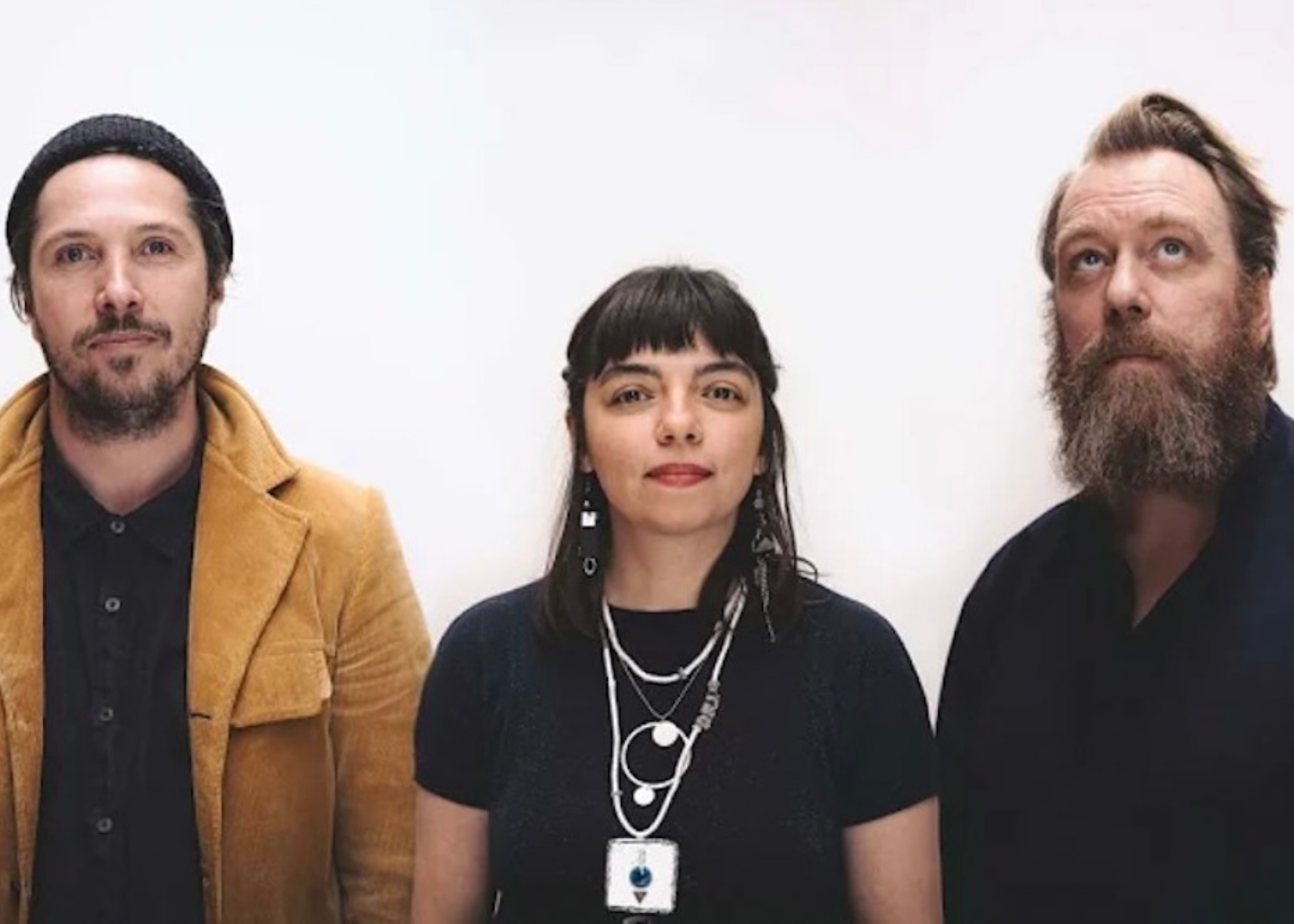
The group consists of Gelareh Pour and Brian O’Dwyer, who are joined by Brett Langsford on guitar. This album weaves traditional Persian instruments, such as the Kamancheh and Qeychak played by Pour, with O’Dwyer’s drum kit and Langsford’s guitar. It’s a lushly textured space where sound and silence become equally expressive. Rooted in poetry by beloved Farsi writers like Shams Langeroudi, Ahmad Reza Ahmadi, and Hushang Ebtehaj, these pieces are not just songs but conversations between past and present, between voice and memory.


Recorded live, mostly in single takes, the album is a call to mindfulness. It asks the listener to lean in and hear what lies beneath the surface. What follows is a track-by-track journey written by Gelareh, which brings us into the world they’ve created —a world shaped by absence, belonging, and quiet transformation.
Give Water To Birds is out today (buy here). Stream the album below, followed by Gelareh’s exclusive track-by-track guide.
Caspian
This piece is rooted in longing. I imagined myself standing on the shore of the Caspian Sea, but not from within Iran. I’m singing to the waves from the other side, sending messages to those I miss, especially my family in Rostamrood, where the cover photo of the album was taken. In that image, my brother is feeding stray dogs, a ritual he’s maintained for years.
I grew up spending a lot of time on that shore, swimming, playing with cousins, sharing fresh fish for lunch on the balcony, watching the water change with the light. These are cherished memories, and this track holds all of them.
The poem we use is by Siavash Kasraei, a poet I deeply admire. I sing to the sea as if it’s my homeland, as if it’s my mother. I ask it to hold me, love me, and carry my message back to the people on the other side, the side I can’t reach. I don’t know for how long I’ll be away, and this song helps me sit with that uncertainty.
Forever Tehrani
The poem for this track is by Ahmadreza Ahmadi. For me, this piece encapsulates the theme of parallel worlds that runs throughout the album. It’s about falling in love with different places and how those places begin to live inside you. They run parallel to each other, becoming deeper and wider over time, worlds within which we live simultaneously.
Tehrani means, from Tehran
When I perform this track, I’m transported to a particular street in Tehran, a path I walked daily between home and school during my middle school years. That street straddled quiet residential calm and the chaos of busy shops and schools. Along it stood a house with a clay-and-hay wall, built in the old Persian style. I remember brushing my hand along that wall, mesmerised by its texture and the hidden garden beyond it.
Forever Tehrani is a declaration: no matter where I go, I am, and will always be, Tehrani.
Tasian
The word tasian comes from Guilan, in northern Iran, where my father is from. It describes a very specific kind of sorrow, missing someone so deeply it creates a hollow in your chest, like part of your heart is gone.
The people from that region, in my experience, love with their whole hearts. They’re emotional, and they often struggle with grief and absence. I grew up around them, my father, my cousins, my aunties and grandmother, and their way of loving shaped me.
Written by Hushang Ebtehaj, this poem is about being a child inside a house, waiting for someone you love to return. It’s a gloomy sunset. Your father tries to keep hope alive with light; your mother reassures you. But you, the child, are learning that people can leave and never come back. You’re learning that there’s a word called ‘never’.
Hours of Ripened Grapes
This poem by Shams Langeroudi radiates hope. It’s a light, uplifting piece, sparkling, like how water catches the last light of sunset.
It’s about wind, calling for rain, and nature coming together to help a grape ripen into something like a diamond. It holds joy, the kind you plant in your heart like a seed. Over time, it grows, and eventually you can harvest it. That feeling is at the heart of this track.
On Our Little Balcony
This poem, written by Fereydoon Moshiri, was originally composed for his daughter, Bahar, her name means spring. For this track, my father, Eshagh Abdollahpour, recites the poem. It means so much to me to have captured his voice in this album.
My parents were the heart of my exposure to poetry, music, and kindness. In our last album, we used his handwriting on the vinyl’s fourth side in an etching. This time, we captured the warmth of his voice, the same voice I heard as a child when he sang lullabies or recited poems on car rides.
The poem paints a dream: a blooming garden, a tree, a clear sky seen through smoke, dust, bricks, and oppression. A bird on a balcony sees beauty despite the obstacles. That vision, that dream, is a gift I wanted to share.
Marbles for Kaylie
This final track is named for Kaylie Melville, our dear friend and a phenomenal percussionist. Brian was inspired by a technique she shared with us in another project, and it felt right to honour her here.
The piece is instrumental. It’s playful, but also forceful, energetic and full-bodied. It reflects our trio’s connection: myself, Brian, and Brett Langford. This is the first album we’ve created together in this formation. The track captures that moment, after hours of recording, when we’d reached a beautiful synchronicity.
We recorded in Brett’s studio, which he built by hand over a decade in Romsey, Australia. The studio sits in the bush, surrounded by birds. We didn’t realise until later that the birdsong had been captured in our recordings by our engineer Myles Mumford. It was as if two worlds, ours and theirs, had fused. Their frequencies intertwined with ours, forming a quiet, invisible connection that made the album whole.
