
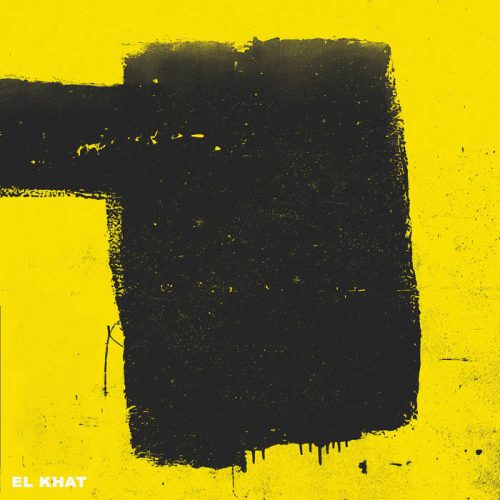

In 2019, Yemeni-Israeli band El Khat won the hearts of fans and critics with their blend of folk, pop and punk, distilling traditional songs into delightful, chaotic concoctions. Saadia Jefferson, their debut LP on Batov Records, was praised for its raw exuberance and joyful dissonance.
Follow up Albat Alawi Op.99, mainly recorded during the Covid-19 lockdown, saw a shift in the group’s approach, moving away from re-imagining existing songs and focusing more on original compositions from band leader and main songwriter El Wahab. The band’s signature self-made instruments and wonky, hypnotic rhythms influenced by old Yemeni pop songs are still present, but the overall tone is darker.
The group’s third album, mute continues to forge down this path, using the front man’s personal experiences as a starting point for a wider conversation on displacement, erasure and alienation. If Saadia Jefferson was about El Wahab rediscovering ‘60s songs he heard growing up and making them his own, while Albat Alawi Op.99 saw him embrace a more auctorial role, mute draws from the two directions in an effort to convey a more overtly political message, partially inspired by the group’s own move from Jaffa to Berlin.
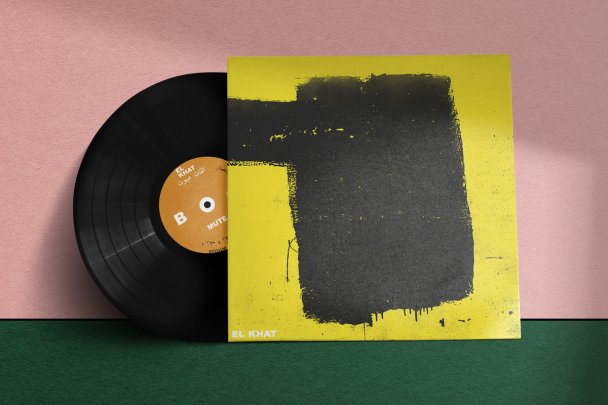
“Every distance between two people is an opportunity for conflict. Two of anything creates sides and sides create conflict. In such cases there will be muting,” el Wahab writes in the liner notes. Across the album, “mute” takes different meanings. Opener “Tislami Tislami”, perhaps the most explicitly pop number on the record, transforms the story of a lover’s betrayal into an opportunity for growth and moving on. The drum beat punctuated by flute laments creates a heady incantation as el Walab sings “Thank you for forgetting me / So I can have new memories”. “La Wala”, an ebullient brass and guitar piece, talks about migration and leaving people behind, while maintaining an addictive melody. Displacement is further touched upon on “Almania”, the Arabic name for Germany, the band’s new home, a kaleidoscopic instrumental track where sinewy organ motifs, booming bass and noisy percussion contrast and collide.
mute contains moments of pure levity as well, as illustrated by “Commodore Lothan”, a comedic dedication to the group’s drummer Lotan Yaish, nicknamed “Commander”. With its wonky beat and serpentine organ refrain, “Commodore Lothan” klangs and slithers into a unique deconstructed dance, slightly off-kilter.
At times, the messaging of mute may come off rather muddled, although el Wahab makes sure to clearly state his political stance. “We Arab Jews of Yemeni origin condemn the war in Gaza”, he says. “I cannot even share my feelings with my friends and family anymore”.
Perhaps mute is less about making a clear statement and more about exploring the different ways in which the breakdown of communication, conflict and the overall distance between people are disseminated on both a personal and global scale. If anything, its sonic rugged edges and rhythmic clashes perfectly embody the many contradictions it’s trying to convey.
